La detección de vídeo mediante IA ya está disponible.

Obtén una demostración

Moodle
Plagio y
Verificador de contenido con IA

Integra sin problemas el poder de Copyleaks en tu plataforma Moodle.

Una solución integral para la integridad académica.

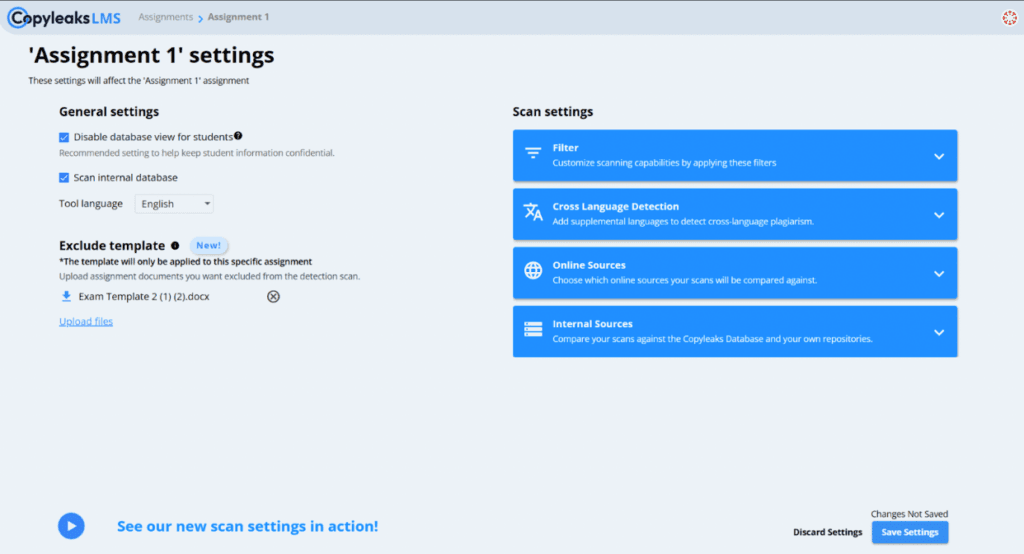
Mantener la autenticidad en el aula no debería suponer un coste elevado. Muchos de nuestros competidores obligan a los educadores a elegir entre añadir funciones o gastar una fortuna en herramientas complementarias. Copyleaks ofrece una solución integral y unificada que integra todas las herramientas necesarias, incluyendo detección de plagio mediante IA y corrector gramatical, todo en una misma plataforma.

Report on the History of Cheese
Dec 21st, 2024 at 9:30AM Group A Seulgi Kim

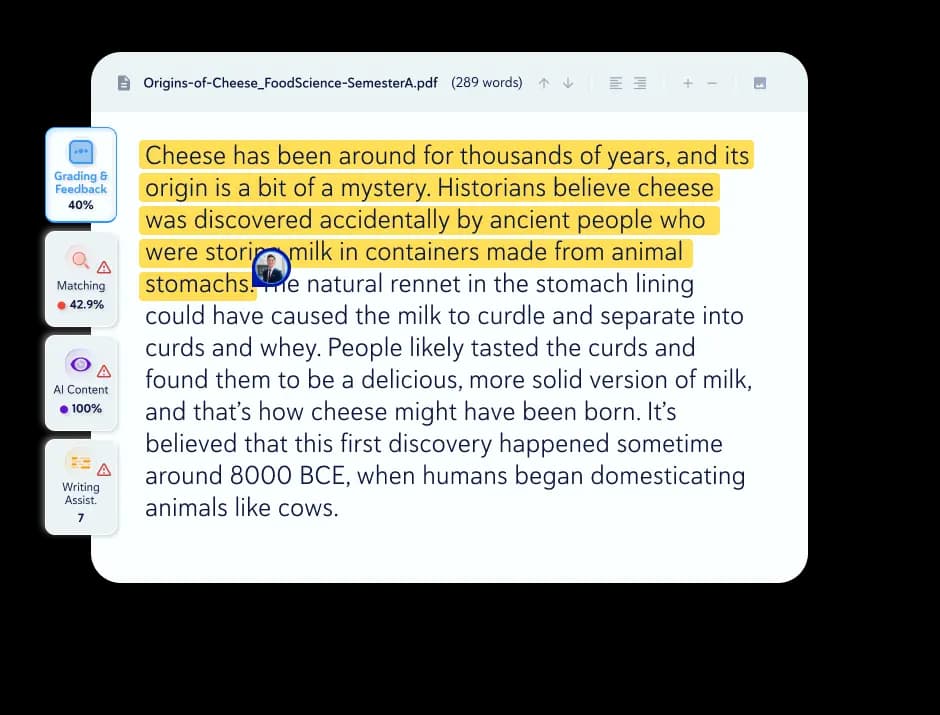
Cheese has been around for thousands of years, and its origin is a bit of a mystery. Historians believe cheese was discovered accidentally by ancient people who were storing milk in containers made from animal stomachs. The natural rennet in the stomach lining could have caused the milk to curdle and separate into curds and whey.

People likely tasted the curds and found them to be a delicious, more solid version of milk, and that's how cheese might have been born. It's believed that this first discovery happened sometime around 8000 BCE, when humans began domesticating animals like cows.

As people realized they could make cheese, they started experimenting with different types of milk and methods of preparation. The earliest cheese makers were probably nomadic herders in the Middle East or Central Asia.

Overview

Quick Summary

  • Plagiarism: Decreased to 0%, from last assessment.
  • AI-Generated Content: 32% of the content is AI-generated.
  • Writing Errors: No errors, fewer than average.
  • Historical Author Data: The current assignment plagiarism score of 0% is lower than the average rate of 27%.
Tell Me More Rewrite
Last 90 Days
152
Total Scans
Detection Instances
Contains Writing Corrections 50
Contains AI Text 120
Contains Matching Text 90
No Issues Found 12
Graded
299
Cheats found
23
Originality Over Time
AI Content Detection Avg. 65%
Matching Text Avg. 56%
80% 60% 40% 20% 0% SCORE APR 23 MAY 23 JUN 23 JUL 23 AUG 23 SEP 23 OCT 23 NOV 23
Writing Corrections
80 60 40 20 0 SCORE APR 23 MAY 23 JUN 23 JUL 23 AUG 23 SEP 23 OCT 23
Report on the History of Cheese
Dec 21st, 2024 at 9:30AM Group A Seulgi Kim

Cheese has been around for thousands of years, and its origin is a bit of a mystery. Historians believe cheese was discovered accidentally by ancient people who were storing milk in containers made from animal stomachs. The natural rennet in the stomach lining could have caused the milk to curdle and separate into curds and whey. People likely tasted the curds and found them to be a delicious, more solid version of milk, and that's how cheese might have been born. It's believed that this first discovery happened sometime around 8000 BCE, when humans began domesticating animals like cows.

As people realized they could make cheese, they started experimenting with different types of milk and methods of preparation. The earliest cheese makers were probably nomadic herders in the Middle East or Central Asia.

⋮
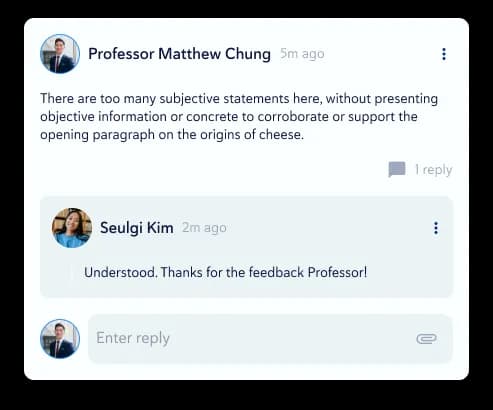
There are too many subjective statements here, without presenting objective information or concrete to corroborate or support the opening paragraph on the origins of cheese.
1 reply
⋮
Understood. Thanks for the feedback Professor!
Enter reply
Report on the History of Cheese
Dec 21st, 2024 at 9:30AM Group A Seulgi Kim

Cheese has been around for thousands of years, and its origin is a bit of a mystery. Historians believe cheese was discovered accidentally by ancient people who were storing milk in containers made from animal stomachs. The natural rennet in the stomach lining could have caused the milk to curdle and separate into curds and whey.

People likely tasted the curds and found them to be a delicious, more solid version of milk, and that's how cheese might have been born. It's believed that this first discovery happened sometime around 8000 BCE, when humans began domesticating animals like cows.

As people realized they could make cheese, they started experimenting with different types of milk and methods of preparation. The earliest cheese makers were probably nomadic herders in the Middle East or Central Asia.

Matching Results (35)
Internet12%
This Batch32%
AI Source Match65%ⓘ
Report on the History of Cheese
Dec 21st, 2024 at 9:30AM Group A Seulgi Kim

Cheese has been around for thousands of years, and its origin is a bit of a mystery. Historians believe cheese was discovered accidentally by ancient people who were storing milk in containers made from animal stomachs. The natural rennet in the stomach lining could have caused the milk to curdle and separate into curds and whey.

People likely tasted the curds and found them to be a delicious, more solid version of milk, and that's how cheese might have been born. It's believed that this first discovery happened sometime around 8000 BCE, when humans began domesticating animals like cows.

As people realized they could make cheese, they started experimenting with different types of milk and methods of preparation. The earliest cheese makers were probably nomadic herders in the Middle East or Central Asia.

AI Content Foundⓘ
80%
AI Logic ⓘ
AI Source Match New 3 Results
88.8%
AI Phrases 44 Phrases
93x
964x
Report on the History of Cheese
Dec 21st, 2024 at 9:30AM Group A Seulgi Kim

Cheese has been around for thousands of years, and its origin is a bit of a mystery. Historians believe cheese was discovered accidentally by ancient people who were storing milk in containers made from animal stomachs. The natural rennet in the stomach lining could have caused the milk to curdle and separate into curds and whey.

People likely tasted the curds and found them to be a delicious, more solid version of milk, and that's how cheese might have been born. It's believed that this first discovery happened sometime around 8000 BCE, when humans began domesticating animals like cows.

As people realized they could make cheese, they started experimenting with different types of milk and methods of preparation. The earliest cheese makers were probably nomadic herders in the Middle East or Central Asia.

Readability Score: Very easy to read
Corrections (305)
Grammar 200 CORRECTIONS
Sentence Structure 20 CORRECTIONS
Word Choice 20 CORRECTIONS
Mechanics 20 CORRECTIONS
Chronological

Una experiencia Moodle sin interrupciones

Fomenta el aprendizaje y la escritura sin errores, manteniendo todo lo que necesitas en un solo lugar gracias a la integración de Copyleaks con Moodle.

Ve más allá de la detección palabra por palabra con la única plataforma que:

  • Detecta contenido generado por IA de ChatGPT, Gemini, Claude y más.
  • Detecta múltiples formas de parafraseo, incluido el código fuente.
  • Realiza plagio de texto basado en imágenes.
  • Revela los intentos de engañar al software de detección.
  • Detecta código fuente generado por IA y plagio de código.
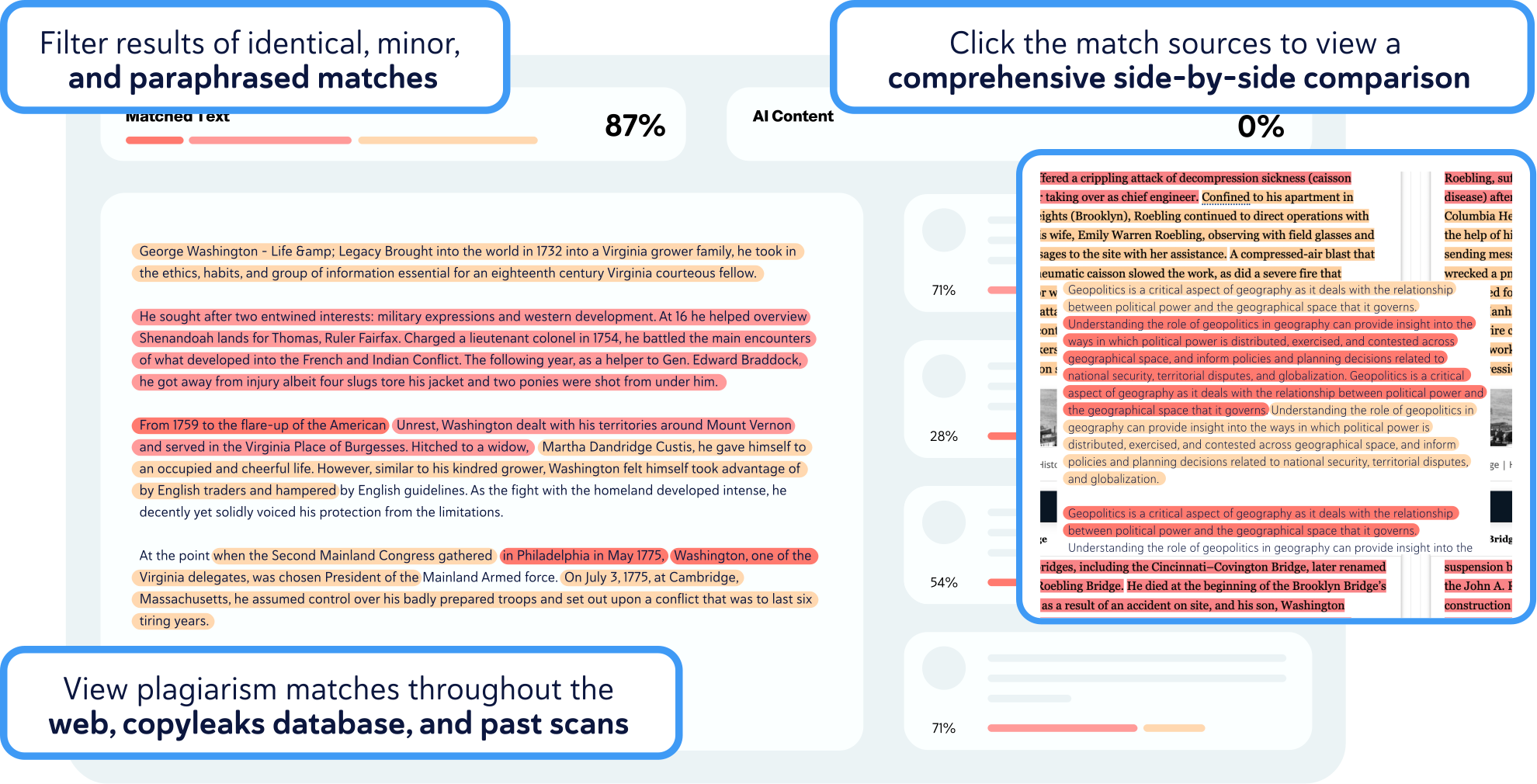
Informe web de Copyleaks dentro de la plataforma MoodleHaga clic aquí para ver un ejemplo de informe interactivo.

Sample interactive plagiarism report

Presentamos la lógica de la IA

La lógica de la IA es un enfoque de detección por capas que combina múltiples métodos de análisis para comprender mejor cómo la IA pudo haber influido en un texto. Con mayor transparencia y razonamiento sobre los resultados del Detector de IA , los instructores podrán abordar los momentos de aprendizaje con confianza.

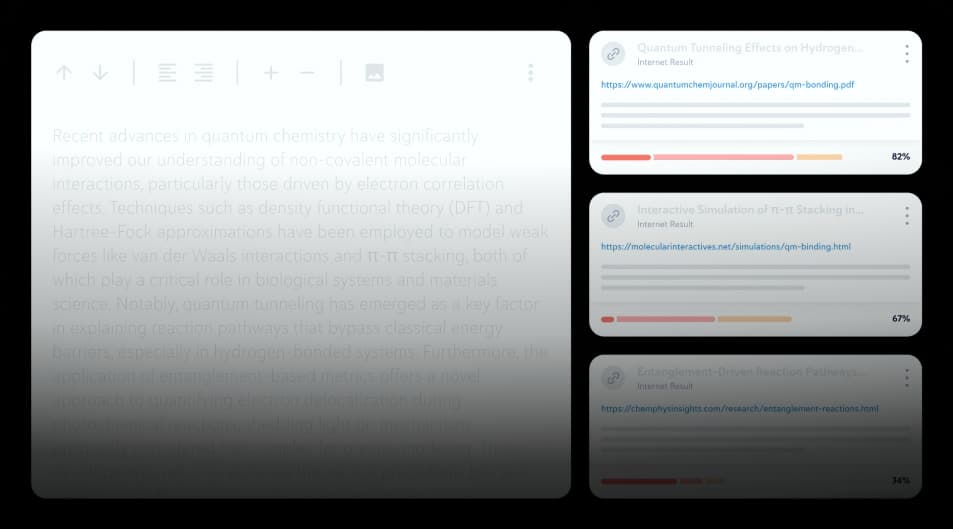
Coincidencia de fuentes de IA

Evalúa si alguna parte del texto coincide con contenido generado por IA que ya ha sido publicado en otro lugar.

Frases de IA

Detecta frases que aparecen con mayor frecuencia en textos escritos por IA que en textos escritos por humanos.

Lea más sobre la lógica de la IA.

NUEVA FUNCIÓN

Resumen: Califica de forma más inteligente, no más difícil.

Calificar no debería ser una búsqueda tediosa para obtener información valiosa. Con Overview , obtendrá la información clave que necesita, rápidamente.

Ahorra tiempo, califica más rápido

Se acabó el tener que revisar informes. Obtén información valiosa al instante y de un vistazo.

Detectar problemas recurrentes

Identificar patrones y ayudar a los estudiantes donde más lo necesiten.

Claridad sin esfuerzo

La sección "Resumen" resalta los datos esenciales para que pueda concentrarse en lo que realmente importa.

Una primicia en la industria

Ninguna otra plataforma ofrece este nivel de transparencia y eficiencia.

Características de integración con LMS

Integración de metadatos de Crossref

Incluya la verificación de datos bibliográficos en su flujo de trabajo. Identifique el contenido publicado que aparece en el texto escaneado y recupere sus citas exactas para evitar el plagio accidental.

Corrector gramatical

Potencie el proceso de escritura con una solución integral para correcciones gramaticales, estructura de oraciones, sugerencias de tono y mecánica general, sin preocuparse por ser detectado como inteligencia artificial.

Obtén más información aquí .

Ejemplo de corrector gramatical

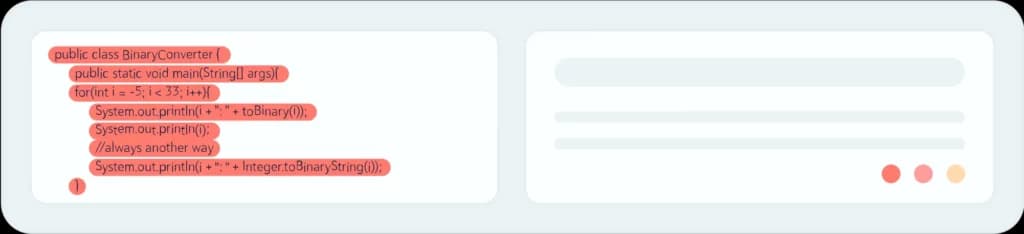
Detección de código fuente

Copyleaks es la única plataforma que verifica la originalidad y autenticidad del código fuente, incluido el código generado por IA, reconoce el plagio potencial del código y detecta el código modificado.

Ejemplo de escaneo de código fuente

Seguridad de grado militar completo

Una arquitectura de sistema basada en la nube, cifrado de grado militar de 256 bits con conexión SSL y transferencia de datos 100% HTTPS garantizan su total seguridad.

Cumple con el RGPD y cuenta con las certificaciones SOC 2 y SOC 3 .

Visite las páginas de Seguridad y Cumplimiento .

¿Listo para comenzar con la integración del LMS para Moodle?

Solicita una demostración