Copyleaks Accelerates Education Market Growth as Institutions Rethink Academic Integrity
With new integrations and expanded partnerships across leading LMS platforms, Copyleaks now reaches up to 80% of the K-12 market and 95% of higher education
AI is now part of the classroom and learning environment. That does not mean every assignment should become a technology challenge or every student submission should be viewed with suspicion. It does, however, mean that schools must fully understand how work is being created, and whether it is supporting learning or beginning to replace it. The goal is not to ban or replace AI use. It is to ensure that student effort, authorship, and learning take place.
According to Copyleaks’ 2025 AI in Education Trends Report, nearly 90% of students now use AI in assignments, often from start to finish. Yet only 61% are moderately or less confident that they are genuinely learning and improving their own skills when using it. As AI reshapes teaching and learning, institutions seek the insights and analytics that provide context for both the student and instructor to support authentic learning.
Institutions increasingly seek a tool that provides context into AI use, allows for constructive and defensible conversations with students, and fully transparent proprietary data on how AI and plagiarism are used by students. The question of whether AI belongs in education has long passed. For educators, the focus is now on understanding how students are using AI, implementing integrity policies that reflect those behaviors, and using transparent writing insights to reinforce authentic learning.
This idea is guiding Copyleaks’ momentum in education, uniquely positioned in the space to help institutions tackle these problems head-on in ways that have furthered its growth and momentum.
Meeting Educators Where They Already Work
Copyleaks has recently expanded its footprint, with many significant strategic partnerships:
- An expanded partnership with Instructure, which now offers Copyleaks’ AI and text matching solutions to K-12 and higher education institutions. We are Instructure’s Recommended Academic Integrity Partner, integrated directly into the Canvas LMS and payable on the Instructure invoice.
- A preferred partnership with D2L Brightspace that broadens access to Copyleaks’ academic integrity solutions for colleges and universities. Copyleaks is integrated into the LMS and payable on the same invoice.
- A new Google Classroom integration that brings Copyleaks AI and text matching capabilities directly into the existing workflows of educators across more than 60,000 schools.
Bring transparent writing insights into the LMS your educators already use.
Book a DemoMore Than Just a Score
For decades, academic integrity was largely treated as a plagiarism issue. Did the student copy text from an existing source? Was there a matching source that offered indisputable evidence? If not, did the work at least appear original? That view was effective for a different era, but is suddenly incomplete in a learning environment fueled by generative AI.
AI makes the answers to all these questions much more complicated. Now, original work means more than just “not plagiarized” or “didn’t use AI.” A student may have had some help brainstorming ideas, revising paragraphs, translating phrases, or polishing grammar, but the actual writing was still their own. These uses are not all flagged the same way.
Copyleaks brings multiple academic integrity signals and indicators together for a clearer view of how a submission was created. Along with traditional text and source matching, the platform can surface potential AI generated content, paraphrasing, text manipulation, and other originality insights. The award winning AI Logic adds another layer of context by highlighting the language patterns of the AI related content, helping educators understand not just that something was matched, but why.
Copyleaks does not replace educator judgment or act as the final arbiter on whether misconduct occurred. Instead, it gives the valued context educators need to review alongside a student’s work and the school’s policies.
Real Action for Real Classrooms
AI rules look different in every classroom. With Copyleaks, educators can decide which AI scan settings are universal and which can be adjusted based on classroom needs and assignments. This allows them to have different standards, both overarching as well as specific policies on an educator/department level. That helps schools consistently put their policies into practice.
Explore Academic Integrity.
Book a MeetingFrom Individual Reviews to Institutional Insight
Copyleaks is also helping institutions see patterns in the ways students harness AI. Real-time analytics can determine where and how it is most used, which assignments or assignment types may or may not need guidance, and where the policies in place may not match what is actually happening in the classroom.
That creates a more useful conversation. If one assignment repeatedly produces high levels of AI-assisted work, the answer may not be discipline. It could be that expectations need to be clearer, or the assessment needs to better measure learning expectations.
Academic integrity today is a broader strategic issue, at the intersection of assessment policy, transparency and responsible AI use. Copyleaks is helping institutions modernize their academic integrity practices for responsible AI use by providing educators with greater visibility into how students are working, and where policies may need to be put into place or evolve. Our growth reflects the expanding needs of educational institutions as AI continues to become a permanent part of the classroom.
Meet with an Academic Integrity consultant today to learn more
Book a meetingFAQs
Original work means more than “no AI.” Many students now use AI to brainstorm, revise or polish their writing. The real question is not “did the student use AI?” but rather, whether the student applied original thought and learned the material. Copyleaks helps educators understand how work was created, so they can support authentic learning and have productive conversations about appropriate AI use.
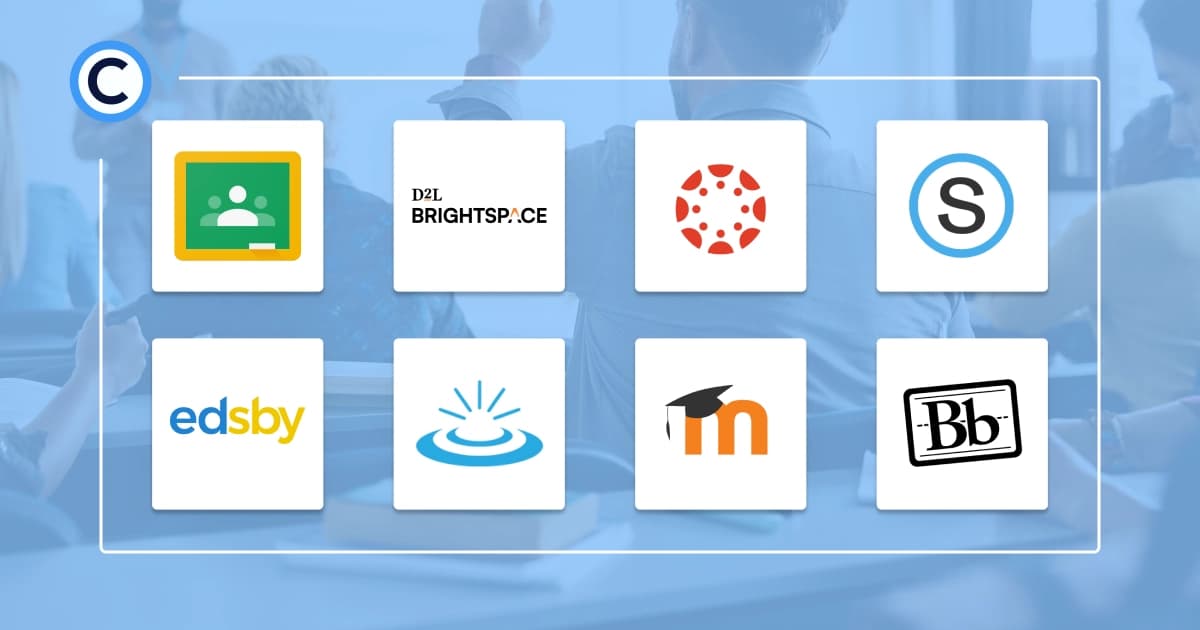
Copyleaks is integrated with Canvas, D2L Brightspace, Google Classroom, Moodle, Blackboard, Schoology, Sakai and Edsby. It also works with any LTI 1.3 asset processor integration. Together, these integrations cover up to 80% of K-12 and 95% of higher education, and they bring the same insights and configurability into every LMS.
Copyleaks is Instructure’s Recommended Academic Integrity Partner for Canvas LMS and a preferred partner of D2L Brightspace. Institutions on either platform can add Copyleaks directly to their existing Instructure or D2L invoice, which makes buying and rollout simpler.
Yes. Academic integrity practices are evolving as quickly as AI does. Administrators can set institution-wide standards for everyone, or let departments or educators adjust them for their course and various assignments and assessments. For example, a final exam can allow no AI use while a homework assignment allows AI for polishing.
AI Logic shows why content was flagged. AI Source Match highlights text that matches known AI-generated content, and AI Phrases points out wording that shows up more often in AI-written text. Educators see the patterns behind a result instead of relying on a single number.