La funzione di rilevamento video tramite IA è ora attiva.

Richiedi una demo

Sakai
Plagio e
Verificatore di contenuti basato sull'IA

Integra senza problemi la potenza di Copyleaks nella tua piattaforma Sakai.

Una soluzione completa per l'integrità accademica.

Mantenere l'autenticità in classe non dovrebbe comportare costi esorbitanti. Molti dei nostri concorrenti costringono gli insegnanti a scegliere tra l'aggiunta di funzionalità o l'acquisto di strumenti "extra" a un prezzo elevato. Copyleaks offre una soluzione completa e integrata che combina tutti gli strumenti necessari, tra cui il rilevamento del plagio tramite intelligenza artificiale, il controllo antiplagio e il correttore grammaticale, il tutto in un'unica piattaforma.

Report on the History of Cheese
Dec 21st, 2024 at 9:30AM Group A Seulgi Kim

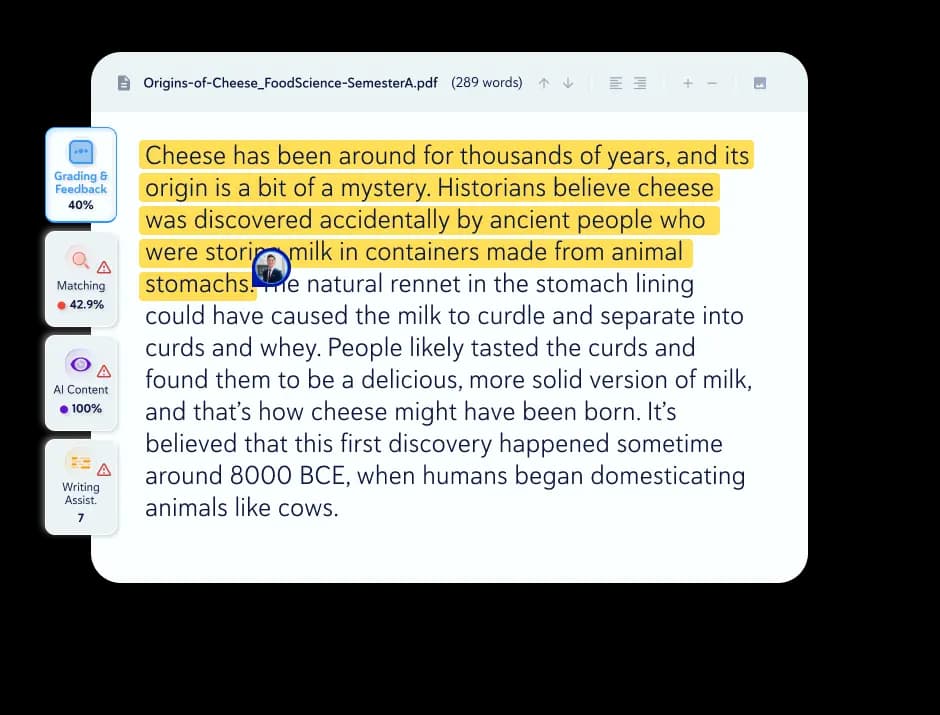
Cheese has been around for thousands of years, and its origin is a bit of a mystery. Historians believe cheese was discovered accidentally by ancient people who were storing milk in containers made from animal stomachs. The natural rennet in the stomach lining could have caused the milk to curdle and separate into curds and whey.

People likely tasted the curds and found them to be a delicious, more solid version of milk, and that's how cheese might have been born. It's believed that this first discovery happened sometime around 8000 BCE, when humans began domesticating animals like cows.

As people realized they could make cheese, they started experimenting with different types of milk and methods of preparation. The earliest cheese makers were probably nomadic herders in the Middle East or Central Asia.

Overview

Quick Summary

  • Plagiarism: Decreased to 0%, from last assessment.
  • AI-Generated Content: 32% of the content is AI-generated.
  • Writing Errors: No errors, fewer than average.
  • Historical Author Data: The current assignment plagiarism score of 0% is lower than the average rate of 27%.
Tell Me More Rewrite
Last 90 Days
152
Total Scans
Detection Instances
Contains Writing Corrections 50
Contains AI Text 120
Contains Matching Text 90
No Issues Found 12
Graded
299
Cheats found
23
Originality Over Time
AI Content Detection Avg. 65%
Matching Text Avg. 56%
80% 60% 40% 20% 0% SCORE APR 23 MAY 23 JUN 23 JUL 23 AUG 23 SEP 23 OCT 23 NOV 23
Writing Corrections
80 60 40 20 0 SCORE APR 23 MAY 23 JUN 23 JUL 23 AUG 23 SEP 23 OCT 23
Report on the History of Cheese
Dec 21st, 2024 at 9:30AM Group A Seulgi Kim

Cheese has been around for thousands of years, and its origin is a bit of a mystery. Historians believe cheese was discovered accidentally by ancient people who were storing milk in containers made from animal stomachs. The natural rennet in the stomach lining could have caused the milk to curdle and separate into curds and whey. People likely tasted the curds and found them to be a delicious, more solid version of milk, and that's how cheese might have been born. It's believed that this first discovery happened sometime around 8000 BCE, when humans began domesticating animals like cows.

As people realized they could make cheese, they started experimenting with different types of milk and methods of preparation. The earliest cheese makers were probably nomadic herders in the Middle East or Central Asia.

⋮
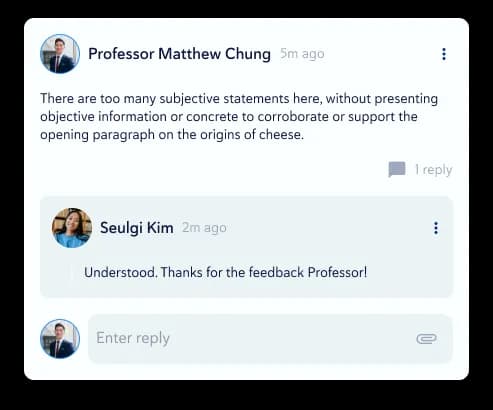
There are too many subjective statements here, without presenting objective information or concrete to corroborate or support the opening paragraph on the origins of cheese.
1 reply
⋮
Understood. Thanks for the feedback Professor!
Enter reply
Report on the History of Cheese
Dec 21st, 2024 at 9:30AM Group A Seulgi Kim

Cheese has been around for thousands of years, and its origin is a bit of a mystery. Historians believe cheese was discovered accidentally by ancient people who were storing milk in containers made from animal stomachs. The natural rennet in the stomach lining could have caused the milk to curdle and separate into curds and whey.

People likely tasted the curds and found them to be a delicious, more solid version of milk, and that's how cheese might have been born. It's believed that this first discovery happened sometime around 8000 BCE, when humans began domesticating animals like cows.

As people realized they could make cheese, they started experimenting with different types of milk and methods of preparation. The earliest cheese makers were probably nomadic herders in the Middle East or Central Asia.

Matching Results (35)
Internet12%
This Batch32%
AI Source Match65%ⓘ
Report on the History of Cheese
Dec 21st, 2024 at 9:30AM Group A Seulgi Kim

Cheese has been around for thousands of years, and its origin is a bit of a mystery. Historians believe cheese was discovered accidentally by ancient people who were storing milk in containers made from animal stomachs. The natural rennet in the stomach lining could have caused the milk to curdle and separate into curds and whey.

People likely tasted the curds and found them to be a delicious, more solid version of milk, and that's how cheese might have been born. It's believed that this first discovery happened sometime around 8000 BCE, when humans began domesticating animals like cows.

As people realized they could make cheese, they started experimenting with different types of milk and methods of preparation. The earliest cheese makers were probably nomadic herders in the Middle East or Central Asia.

AI Content Foundⓘ
80%
AI Logic ⓘ
AI Source Match New 3 Results
88.8%
AI Phrases 44 Phrases
93x
964x
Report on the History of Cheese
Dec 21st, 2024 at 9:30AM Group A Seulgi Kim

Cheese has been around for thousands of years, and its origin is a bit of a mystery. Historians believe cheese was discovered accidentally by ancient people who were storing milk in containers made from animal stomachs. The natural rennet in the stomach lining could have caused the milk to curdle and separate into curds and whey.

People likely tasted the curds and found them to be a delicious, more solid version of milk, and that's how cheese might have been born. It's believed that this first discovery happened sometime around 8000 BCE, when humans began domesticating animals like cows.

As people realized they could make cheese, they started experimenting with different types of milk and methods of preparation. The earliest cheese makers were probably nomadic herders in the Middle East or Central Asia.

Readability Score: Very easy to read
Corrections (305)
Grammar 200 CORRECTIONS
Sentence Structure 20 CORRECTIONS
Word Choice 20 CORRECTIONS
Mechanics 20 CORRECTIONS
Chronological

Un'esperienza Sakai impeccabile.

Grazie all'integrazione di Copyleaks con Sakai, stimola l'apprendimento e la scrittura senza errori, tenendo tutto il necessario in un unico pratico luogo.

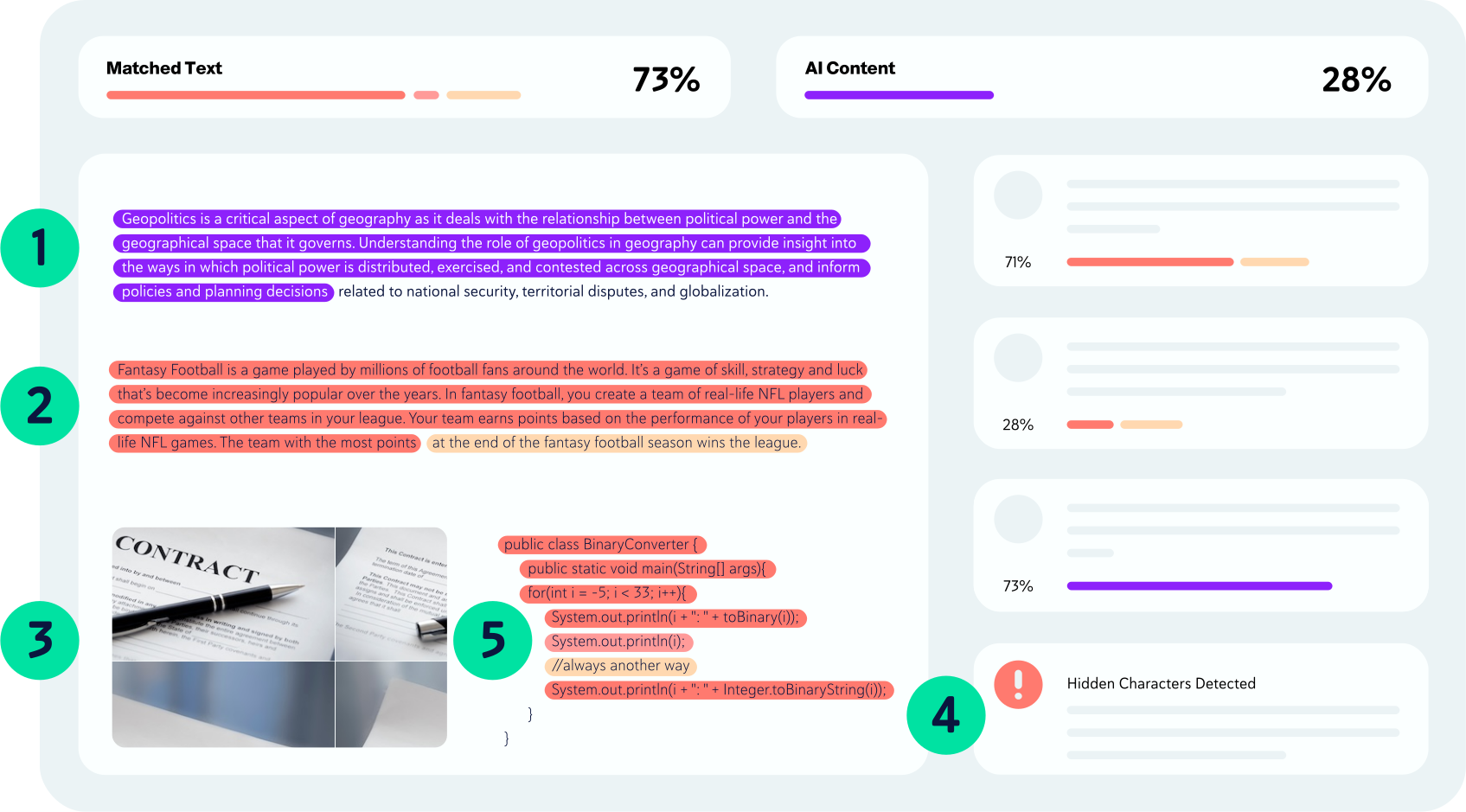
Vai oltre il semplice riconoscimento parola per parola con l'unica piattaforma che:

  • Rileva i contenuti generati dall'IA provenienti da ChatGPT, Gemini, Claude e altri.
  • Rileva molteplici forme di parafrasi, incluso il codice sorgente
  • Esegue il plagio di testo basato su immagini
  • Smaschera i tentativi di ingannare i software di rilevamento
  • Rileva il codice sorgente generato dall'IA e il plagio del codice.
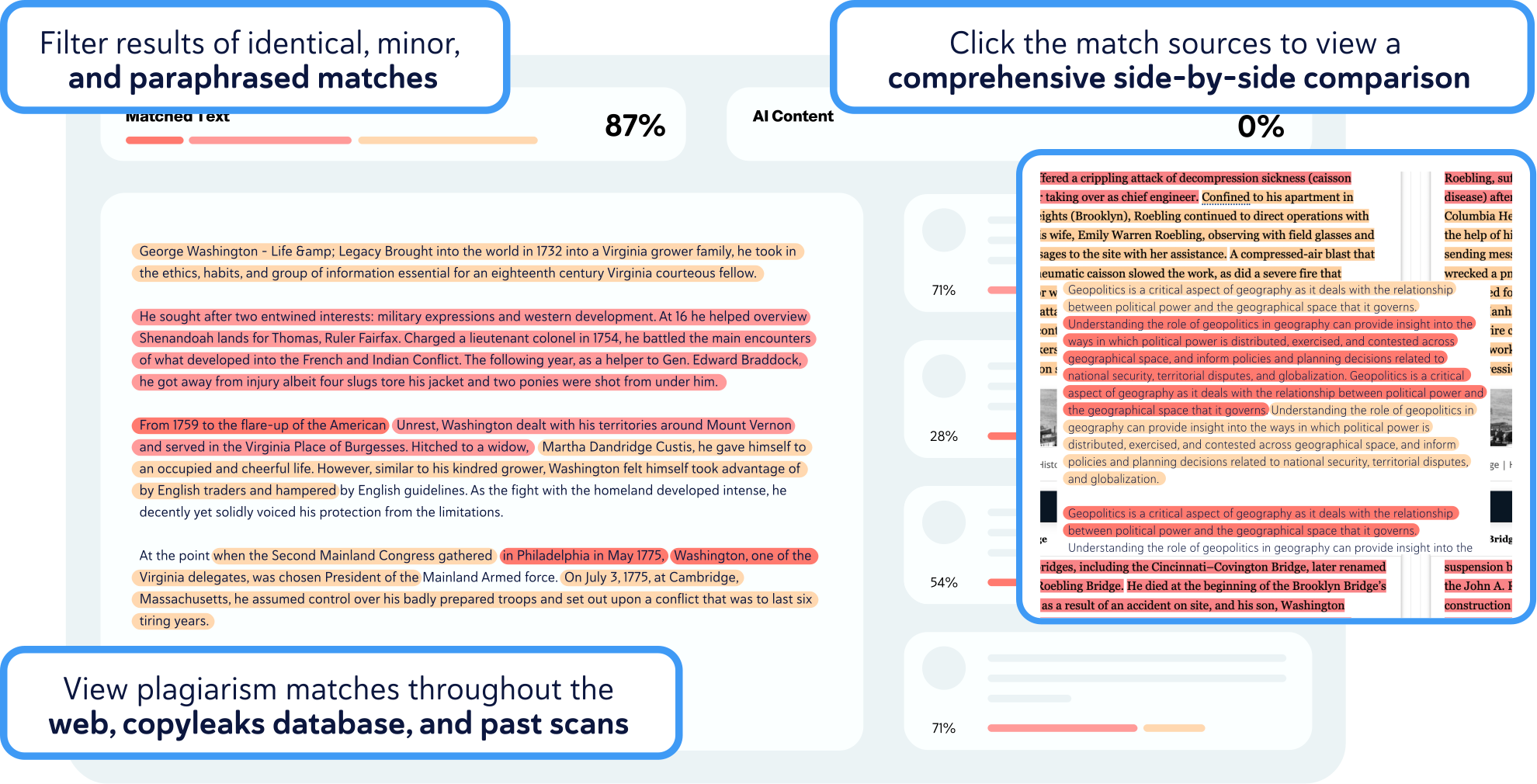
Esempio di report di Copyleaks su plagio e contenuti con intelligenza artificialeClicca qui per visualizzare un esempio di report interattivo

Sample interactive plagiarism report

Presentazione di AI Logic

AI Logic è un approccio di rilevamento a più livelli che combina diversi metodi di analisi per comprendere meglio come l'IA possa aver influenzato un testo. Grazie a una maggiore trasparenza e a una migliore comprensione dei risultati di AI Detector , gli insegnanti possono affrontare con sicurezza i momenti di apprendimento.

Corrispondenza della fonte AI

Verifica se una qualsiasi parte del testo corrisponde a contenuti generati dall'IA già pubblicati altrove.

Frasi di intelligenza artificiale

Rileva le frasi che compaiono con maggiore frequenza nei testi generati dall'IA rispetto a quelli scritti da esseri umani.

Scopri di più su AI Logic

NUOVA FUNZIONE

Panoramica: Valutare in modo più intelligente, non più difficile.

La valutazione non dovrebbe trasformarsi in una lunga e dispendiosa ricerca di informazioni utili. Con Overview , ottieni rapidamente le informazioni chiave di cui hai bisogno.

Risparmia tempo, ottieni voti più velocemente

Niente più analisi approfondite di report. Ottieni informazioni immediate e di facile consultazione.

Individuare i problemi ricorrenti

Individua gli schemi ricorrenti e aiuta gli studenti laddove ne hanno più bisogno.

Chiarezza senza sforzo

La panoramica mette in evidenza i dati essenziali in modo che tu possa concentrarti su ciò che conta davvero.

Una novità assoluta nel settore.

Nessun'altra piattaforma offre questo livello di trasparenza ed efficienza.

Funzionalità di integrazione con i sistemi LMS

Integrazione dei metadati di Crossref

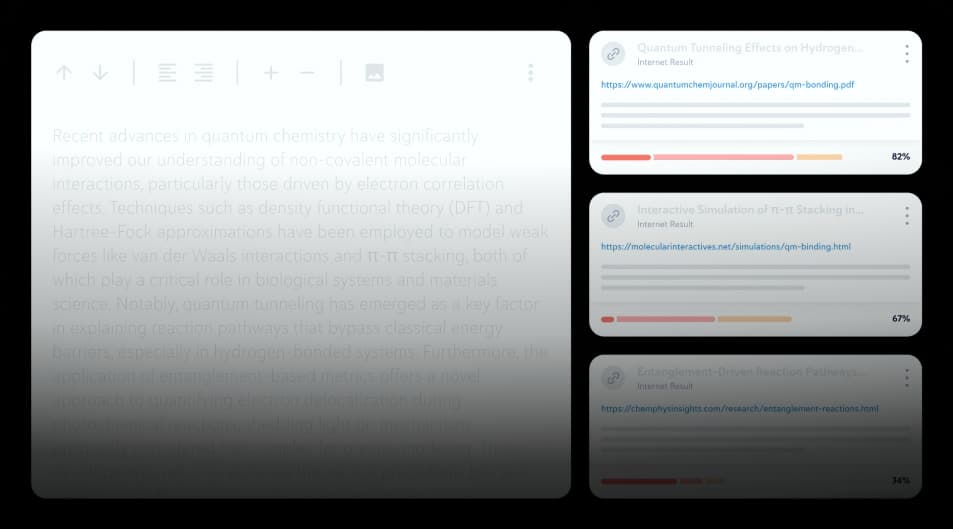
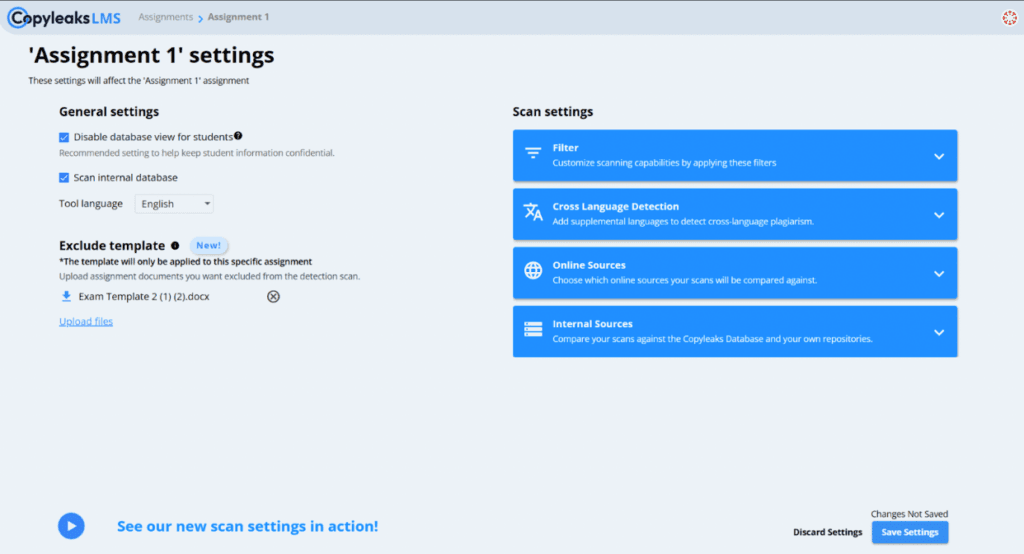
Integra la verifica dei dati bibliografici nel tuo flusso di lavoro. Identifica i contenuti pubblicati che compaiono nel testo scansionato e recupera le relative citazioni precise per prevenire il plagio involontario.

Controllo grammaticale

Ottimizza il processo di scrittura con una soluzione completa per la correzione grammaticale, la struttura delle frasi, i suggerimenti di tono e la meccanica generale, senza il timore di essere rilevato come intelligenza artificiale.

Scopri di più qui .

Esempio di correttore grammaticale

Rilevamento del codice sorgente

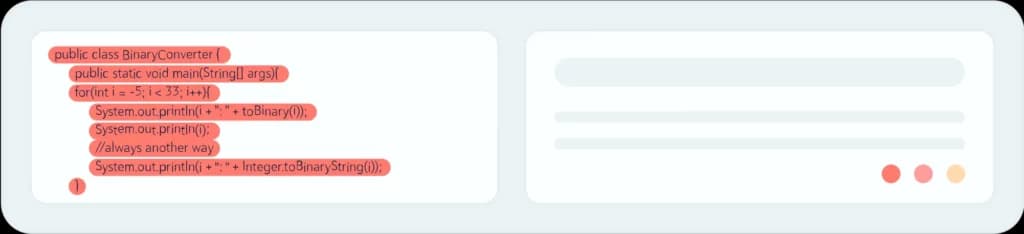
Copyleaks è l'unica piattaforma in grado di verificare l'originalità e l'autenticità del codice sorgente, incluso il codice generato dall'intelligenza artificiale, di riconoscere potenziali casi di plagio e di rilevare modifiche al codice.

Esempio di scansione del codice sorgente

Sicurezza di livello militare completo

Un'architettura di sistema basata sul cloud, una crittografia a 256 bit di livello militare con connessione SSL e un trasferimento dati HTTPS al 100% garantiscono la tua completa sicurezza.

Pronti per iniziare l'integrazione LMS per Sakai?

Richiedi una demo