A detecção de vídeo por IA já está disponível.

Solicite uma demonstração

Integração do Copyleaks LMS para Edsby

Inteligência artificial e detecção de plágio integradas, agora no Edsby.

Uma solução completa para integridade acadêmica

Manter a autenticidade em sala de aula não precisa ser caro. Muitos dos nossos concorrentes obrigam os educadores a escolher entre adicionar funcionalidades ou gastar uma fortuna em ferramentas complementares. O Copyleaks oferece uma solução completa e unificada que integra todas as ferramentas necessárias, incluindo detecção por IA, detecção de plágio e corretor gramatical, tudo em uma única plataforma.

Report on the History of Cheese
Dec 21st, 2024 at 9:30AM Group A Seulgi Kim

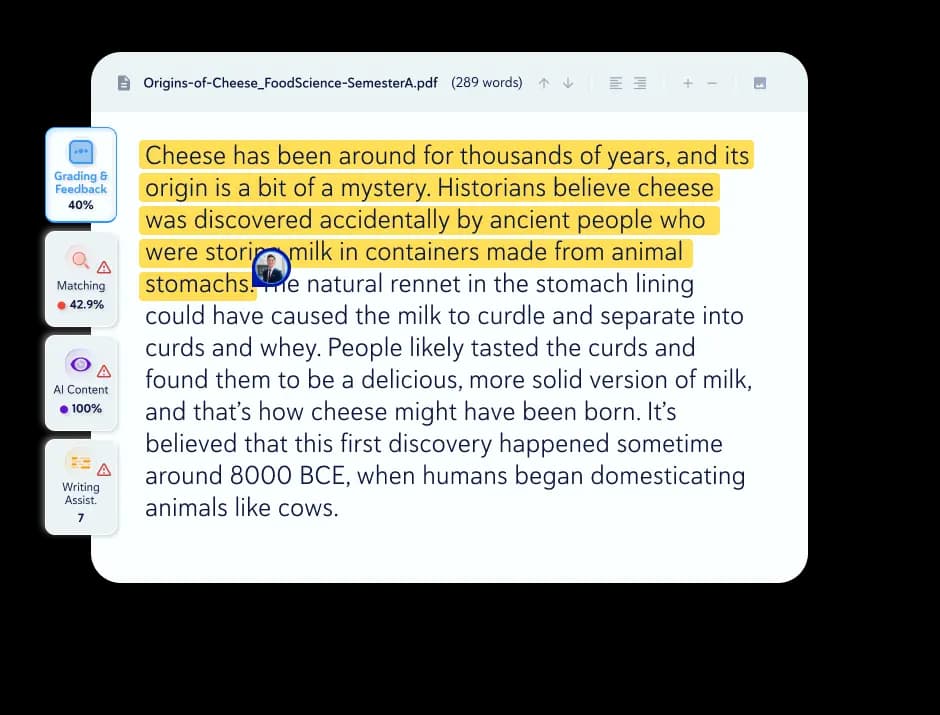
Cheese has been around for thousands of years, and its origin is a bit of a mystery. Historians believe cheese was discovered accidentally by ancient people who were storing milk in containers made from animal stomachs. The natural rennet in the stomach lining could have caused the milk to curdle and separate into curds and whey.

People likely tasted the curds and found them to be a delicious, more solid version of milk, and that's how cheese might have been born. It's believed that this first discovery happened sometime around 8000 BCE, when humans began domesticating animals like cows.

As people realized they could make cheese, they started experimenting with different types of milk and methods of preparation. The earliest cheese makers were probably nomadic herders in the Middle East or Central Asia.

Overview

Quick Summary

  • Plagiarism: Decreased to 0%, from last assessment.
  • AI-Generated Content: 32% of the content is AI-generated.
  • Writing Errors: No errors, fewer than average.
  • Historical Author Data: The current assignment plagiarism score of 0% is lower than the average rate of 27%.
Tell Me More Rewrite
Last 90 Days
152
Total Scans
Detection Instances
Contains Writing Corrections 50
Contains AI Text 120
Contains Matching Text 90
No Issues Found 12
Graded
299
Cheats found
23
Originality Over Time
AI Content Detection Avg. 65%
Matching Text Avg. 56%
80% 60% 40% 20% 0% SCORE APR 23 MAY 23 JUN 23 JUL 23 AUG 23 SEP 23 OCT 23 NOV 23
Writing Corrections
80 60 40 20 0 SCORE APR 23 MAY 23 JUN 23 JUL 23 AUG 23 SEP 23 OCT 23
Report on the History of Cheese
Dec 21st, 2024 at 9:30AM Group A Seulgi Kim

Cheese has been around for thousands of years, and its origin is a bit of a mystery. Historians believe cheese was discovered accidentally by ancient people who were storing milk in containers made from animal stomachs. The natural rennet in the stomach lining could have caused the milk to curdle and separate into curds and whey. People likely tasted the curds and found them to be a delicious, more solid version of milk, and that's how cheese might have been born. It's believed that this first discovery happened sometime around 8000 BCE, when humans began domesticating animals like cows.

As people realized they could make cheese, they started experimenting with different types of milk and methods of preparation. The earliest cheese makers were probably nomadic herders in the Middle East or Central Asia.

⋮
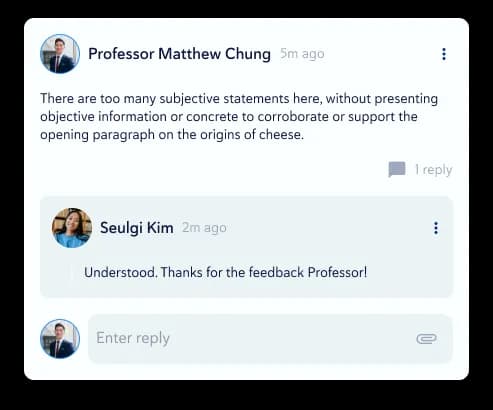
There are too many subjective statements here, without presenting objective information or concrete to corroborate or support the opening paragraph on the origins of cheese.
1 reply
⋮
Understood. Thanks for the feedback Professor!
Enter reply
Report on the History of Cheese
Dec 21st, 2024 at 9:30AM Group A Seulgi Kim

Cheese has been around for thousands of years, and its origin is a bit of a mystery. Historians believe cheese was discovered accidentally by ancient people who were storing milk in containers made from animal stomachs. The natural rennet in the stomach lining could have caused the milk to curdle and separate into curds and whey.

People likely tasted the curds and found them to be a delicious, more solid version of milk, and that's how cheese might have been born. It's believed that this first discovery happened sometime around 8000 BCE, when humans began domesticating animals like cows.

As people realized they could make cheese, they started experimenting with different types of milk and methods of preparation. The earliest cheese makers were probably nomadic herders in the Middle East or Central Asia.

Matching Results (35)
Internet12%
This Batch32%
AI Source Match65%ⓘ
Report on the History of Cheese
Dec 21st, 2024 at 9:30AM Group A Seulgi Kim

Cheese has been around for thousands of years, and its origin is a bit of a mystery. Historians believe cheese was discovered accidentally by ancient people who were storing milk in containers made from animal stomachs. The natural rennet in the stomach lining could have caused the milk to curdle and separate into curds and whey.

People likely tasted the curds and found them to be a delicious, more solid version of milk, and that's how cheese might have been born. It's believed that this first discovery happened sometime around 8000 BCE, when humans began domesticating animals like cows.

As people realized they could make cheese, they started experimenting with different types of milk and methods of preparation. The earliest cheese makers were probably nomadic herders in the Middle East or Central Asia.

AI Content Foundⓘ
80%
AI Logic ⓘ
AI Source Match New 3 Results
88.8%
AI Phrases 44 Phrases
93x
964x
Report on the History of Cheese
Dec 21st, 2024 at 9:30AM Group A Seulgi Kim

Cheese has been around for thousands of years, and its origin is a bit of a mystery. Historians believe cheese was discovered accidentally by ancient people who were storing milk in containers made from animal stomachs. The natural rennet in the stomach lining could have caused the milk to curdle and separate into curds and whey.

People likely tasted the curds and found them to be a delicious, more solid version of milk, and that's how cheese might have been born. It's believed that this first discovery happened sometime around 8000 BCE, when humans began domesticating animals like cows.

As people realized they could make cheese, they started experimenting with different types of milk and methods of preparation. The earliest cheese makers were probably nomadic herders in the Middle East or Central Asia.

Readability Score: Very easy to read
Corrections (305)
Grammar 200 CORRECTIONS
Sentence Structure 20 CORRECTIONS
Word Choice 20 CORRECTIONS
Mechanics 20 CORRECTIONS
Chronological

Uma experiência de reportagem como nenhuma outra

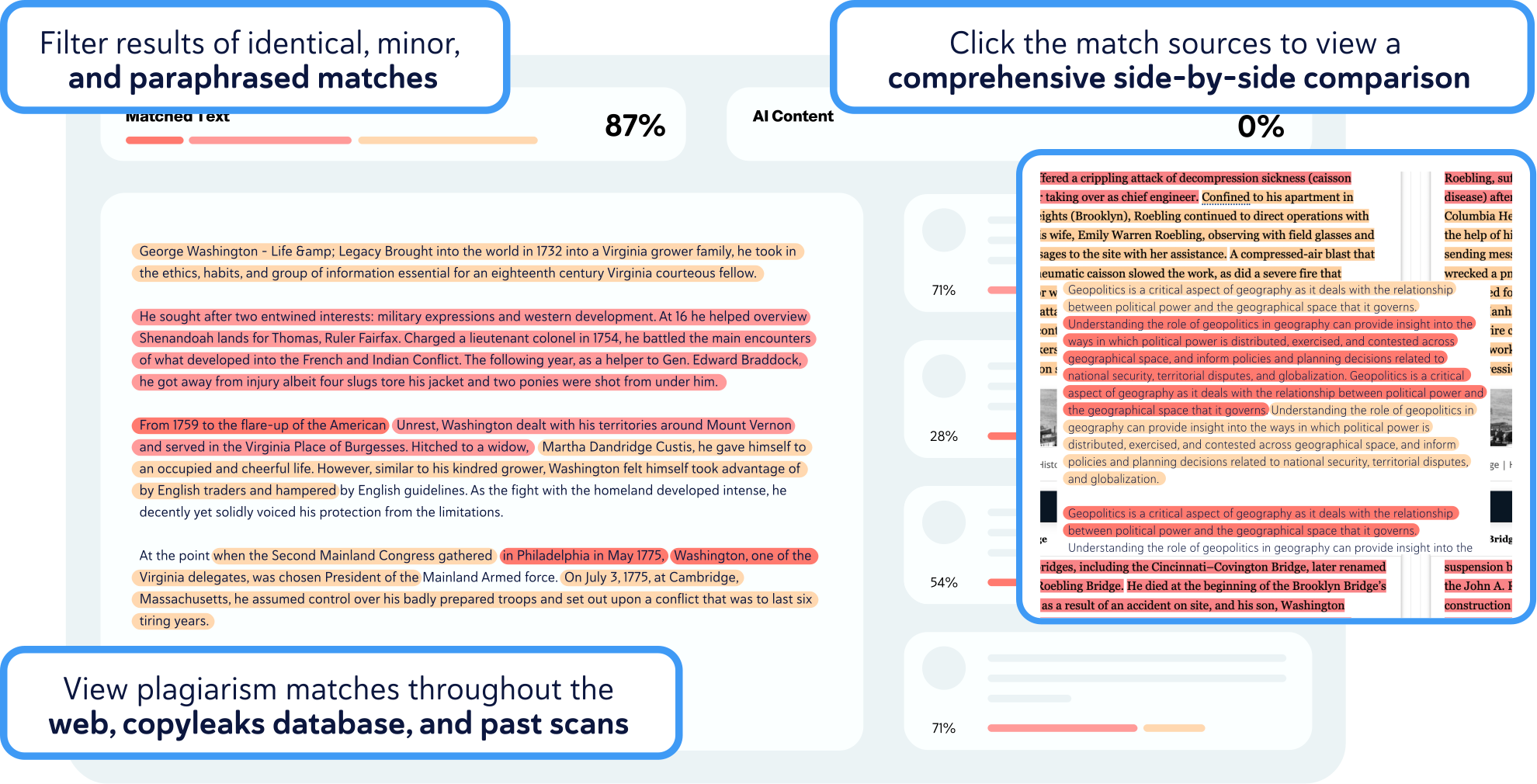
Você receberá relatórios claros, abrangentes, totalmente personalizáveis e interativos a cada digitalização, facilmente baixáveis em formato PDF para compartilhamento.


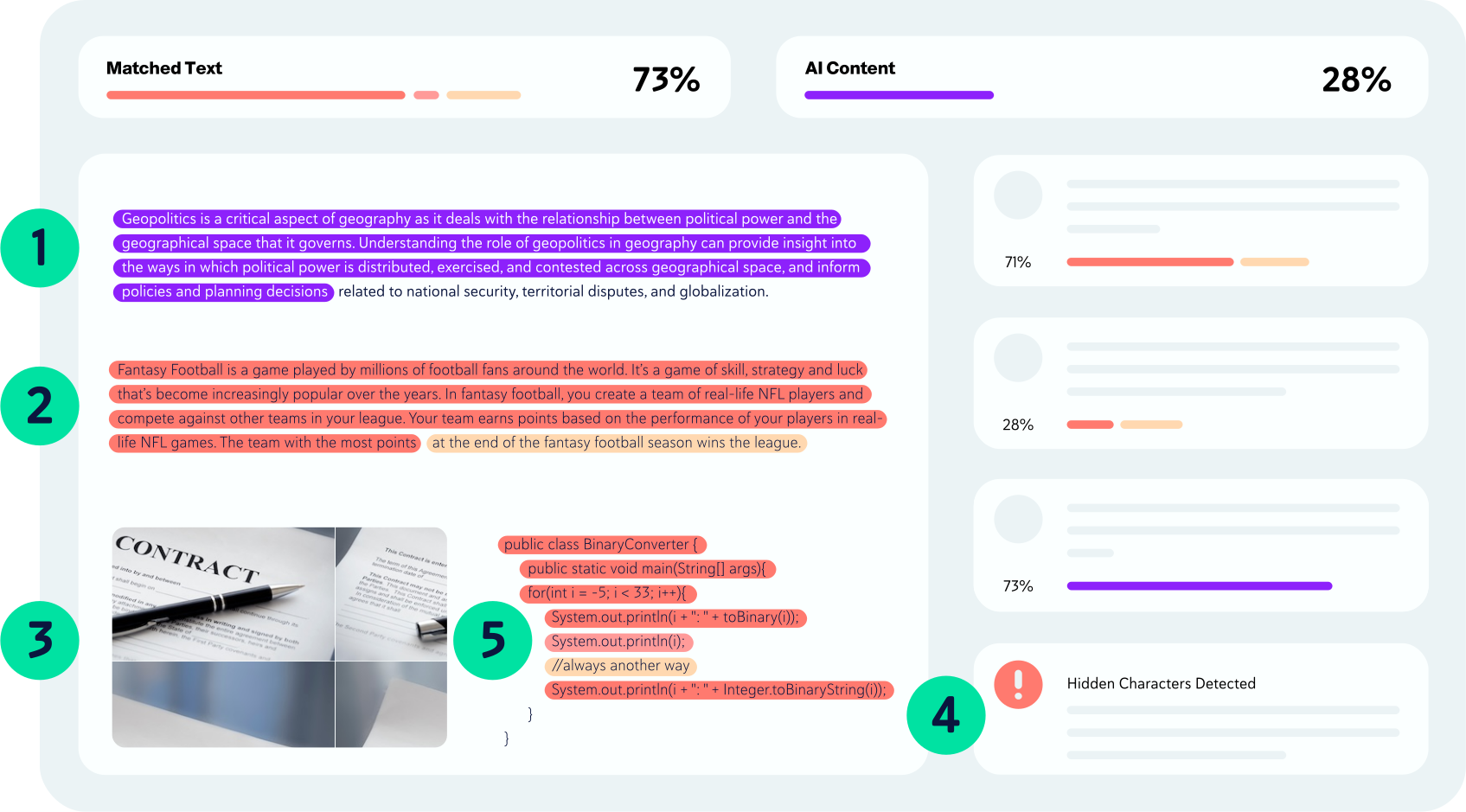
Vá além da detecção palavra por palavra com a única plataforma que:

  • Detecta conteúdo gerado por IA
  • Detecta múltiplas formas de paráfrase.
  • Realiza detecção de plágio de texto com base em imagens
  • Revela tentativas de enganar o software de detecção.
  • Detecta plágio no código-fonte
Exemplo de relatório de plágio e conteúdo de IA da CopyleaksClique aqui para ver um exemplo de relatório interativo.

Sample interactive plagiarism report

Apresentando a Lógica de IA

A Lógica de IA é uma abordagem de detecção em camadas que combina múltiplos métodos de análise para melhor compreender como a IA pode ter influenciado um texto. Com mais transparência e fundamentação sobre os resultados do Detector de IA , os instrutores estarão mais preparados para abordar momentos de aprendizado com confiança.

Correspondência de origem de IA

Avalia se alguma parte do texto corresponde a conteúdo gerado por IA já publicado em outro lugar.

Frases de IA

Detecta frases que aparecem com maior frequência em textos escritos por IA do que em textos escritos por humanos.

Leia mais sobre a Lógica de IA

NOVO RECURSO

Visão geral: Corrija de forma mais inteligente, não mais difícil.

A avaliação não precisa ser uma busca demorada por informações relevantes. Com o Overview , você obtém as informações essenciais de que precisa — rapidamente.

Economize tempo, corrija mais rápido

Chega de vasculhar relatórios. Obtenha informações instantâneas e concisas.

Identificar problemas recorrentes

Identificar padrões e ajudar os alunos onde eles mais precisam.

Clareza sem esforço

A visão geral destaca os dados essenciais para que você possa se concentrar no que importa.

Uma inovação inédita no setor.

Nenhuma outra plataforma oferece esse nível de transparência e eficiência.

Funcionalidades de integração com o LMS

Integração de metadados Crossref

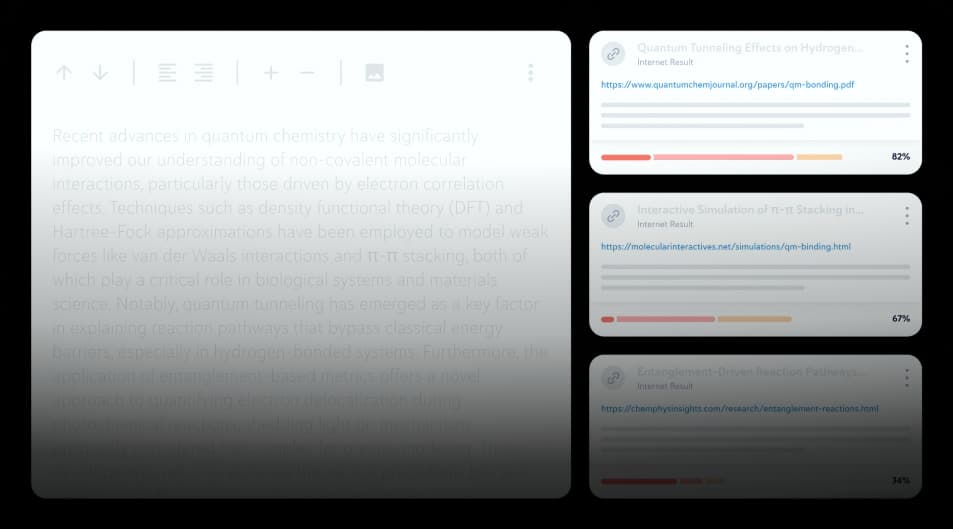
Inclua verificações de dados bibliográficos em seu fluxo de trabalho. Identifique o conteúdo publicado que aparece no texto digitalizado e recupere suas citações precisas para evitar plágio acidental.

Corretor gramatical

Potencialize o processo de escrita com uma solução completa para correções gramaticais, estrutura de frases, sugestões de tom e mecânica geral, sem se preocupar em ser identificado como inteligência artificial.

Saiba mais aqui .

Exemplo de verificador gramatical

Detecção de código-fonte

Copyleaks é a única plataforma capaz de verificar a originalidade e autenticidade do código-fonte, incluindo código gerado por IA, reconhecer possíveis plágios e detectar código modificado.

Exemplo de análise de código-fonte

Segurança de nível militar completo

Uma arquitetura de sistema baseada em nuvem, criptografia de 256 bits de nível militar com conexão SSL e transferência de dados 100% HTTPS garantem sua total segurança.

Acesse as páginas de Segurança e Conformidade .

Pronto para começar a integração do LMS com o Edsby?

Solicite uma demonstração