
Creating fake IDs and fraudulent documents
In the age of AI-generated content, how can you know what is real? The Copyleaks Deepfake Detector helps you identify manipulated images, with video and audio deepfake detection launching soon, keeping you ahead as threats advance.
Deepfake detection is the process of determining whether an image or video has been created or altered by artificial intelligence. These fakes often appear genuine and are used in scams, fraudulent documents, misinformation campaigns, and other malicious activities.
The Deepfake Detector from Copyleaks helps you spot these fakes by examining patterns in an image to identify signs of AI involvement. This helps determine whether an image is original, altered, or entirely generated by AI.
AI-driven fraud is projected to occur in the U.S. by 2027.
Source: Deloitte
Spike in deepfake fraud attacks in just three years.
Source: Signicat
Of companies have no defenses against deepfakes.
Source: Security.org
Creating fake IDs and fraudulent documents

Presenting false evidence for insurance claims

Spreading misinformation through manipulated political or news images

Operating scams and creating fake profiles on social media.
Copyleaks Deepfake Detector enables organizations to expose these manipulations, act quickly to remove them, and protect their brand’s reputation.
When an image is scanned, Copyleaks analyzes it for structural inconsistencies and hidden signals left by AI systems. The results provide a precise determination of whether an image is authentic, altered, or artificially generated.
Copyleaks utilizes advanced contextual AI, trained on diverse and evolving datasets, which enables us to achieve industry-leading levels of precision. Our approach minimizes false positives and provides explanations behind the results, allowing organizations to act with confidence rather than relying solely on a simple score. No deepfake detection tool can claim 100 percent accuracy.

Receive a clear visual indication of potential AI manipulation with every detection, not just a simple ‘yes’ or ‘no’.

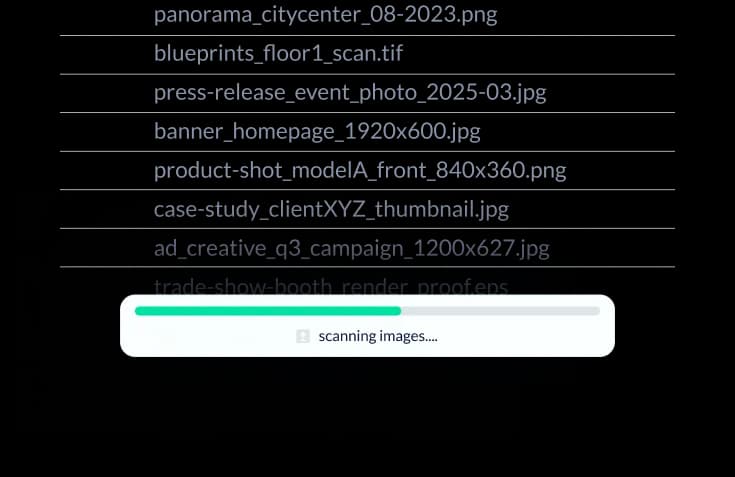
Designed for industries where mistakes are costly, from insurance to finance to media.
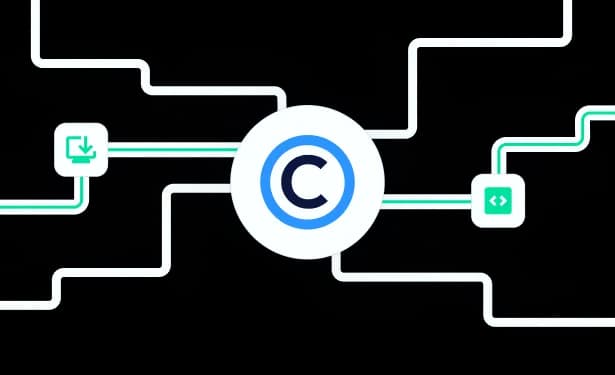
Available via API, enabling the integration of detection into fraud systems, content pipelines, or moderation tools.
An all-in-one platform to verify authenticity across text, images, and code.



Verify news images to prevent the spread of misinformation.
Prevent fraudulent claims and the submission of fake documents.
Ensure the authenticity of images in academic papers and research.
Detect fake profiles, scams, and misleading images, such as listings on sites like Airbnb.
Other detectors rely on metadata, fragile watermarks, or binary results. Copyleaks stands apart:

We don’t just tell you if an image is fake; we show you where AI potentially manipulated an image, providing valuable context.

Our technology is effective even when metadata is stripped or filters are applied, making it difficult to evade.

Copyleaks’ technology is recognized by researchers worldwide for its accuracy and is already trusted by leading enterprises and universities.
As deepfakes become increasingly sophisticated, your organization needs a reliable method to verify what’s real. Our deepfake image detection, with video and audio deepfake detection coming soon, keeps you one step ahead, protecting your reputation and preserving trust.
A deepfake is a piece of digital media, most often an image, video, or audio clip, that has been generated or altered using artificial intelligence to make it appear authentic. Deepfakes can swap faces, mimic voices, or fabricate entire events that never actually happened. While this technology can be used for creative or entertainment purposes, it is increasingly being exploited for fraud, misinformation, and identity manipulation.
The term deepfake combines “deep learning,” the AI technique that powers it, and “fake,” referring to the deceptive or synthetic nature of the content. Deep learning models are trained on large datasets of real human faces, voices, and movements to learn how to replicate them convincingly, often making it difficult to distinguish genuine content from AI-generated fabrications.
Deepfake technology relies on generative AI models such as Generative Adversarial Networks (GANs) or diffusion models. These systems analyze thousands of real-world media examples to learn patterns in expression, lighting, and sound. Once trained, they can generate entirely new, highly realistic content or modify existing footage to replace faces, mimic voices, or alter words and actions.
In short, the AI learns how humans look and sound and then uses that knowledge to produce fake yet convincing replicas.
The most effective way to identify deepfakes is by using advanced AI detection technology like Copyleaks for effective deepfake detection.
When an image is scanned, Copyleaks analyzes it for patterns, textures, and digital signals that reveal whether AI was used in its creation or alteration.
Unlike basic detection tools that rely on metadata or watermarks, Copyleaks uses contextual AI to evaluate structural inconsistencies and hidden digital fingerprints left by generative models. This transparent approach enables organizations to confidently verify content, investigate potential fraud, and safeguard their brand reputation against manipulated media.
In controlled tests, industry-leading deepfake detectors are up to 95% accurate in detecting deepfake content versus real content. That accuracy decreases in a real world environment where deepfake detection technology has advanced rapidly. Copyleaks uses advanced contextual AI trained on diverse and evolving datasets, which allows us to reach industry-leading levels of precision. Our approach minimizes false positives and provides explanations behind the results, allowing organizations to act with confidence rather than relying solely on a simple score. No deepfake detection tool can claim 100 percent accuracy.
Yes, some deepfakes are able to fool even the best detectors. High-quality deepfakes are designed to bypass detection by applying filters, compressing images, or altering signals that detectors look for. Copyleaks ensures we achieve the most reliability in our deepfake detector by continuously training our models against the latest AI generators and manipulation techniques. This ensures that even as deepfakes become more sophisticated, our system adapts to identify them with consistency and reliability.
No, but it is being developed by our product team. At present, Copyleaks detection is focused on still images, where accuracy and explainability are critical. Video deepfake detection is part of our roadmap, and our team is actively exploring solutions that apply the same transparency and trust our clients expect from our image detection. For now, Copyleaks can serve as a strong safeguard for image authenticity while we expand into video.