Trust in Crisis: How AI Manipulation Undermines Photojournalism
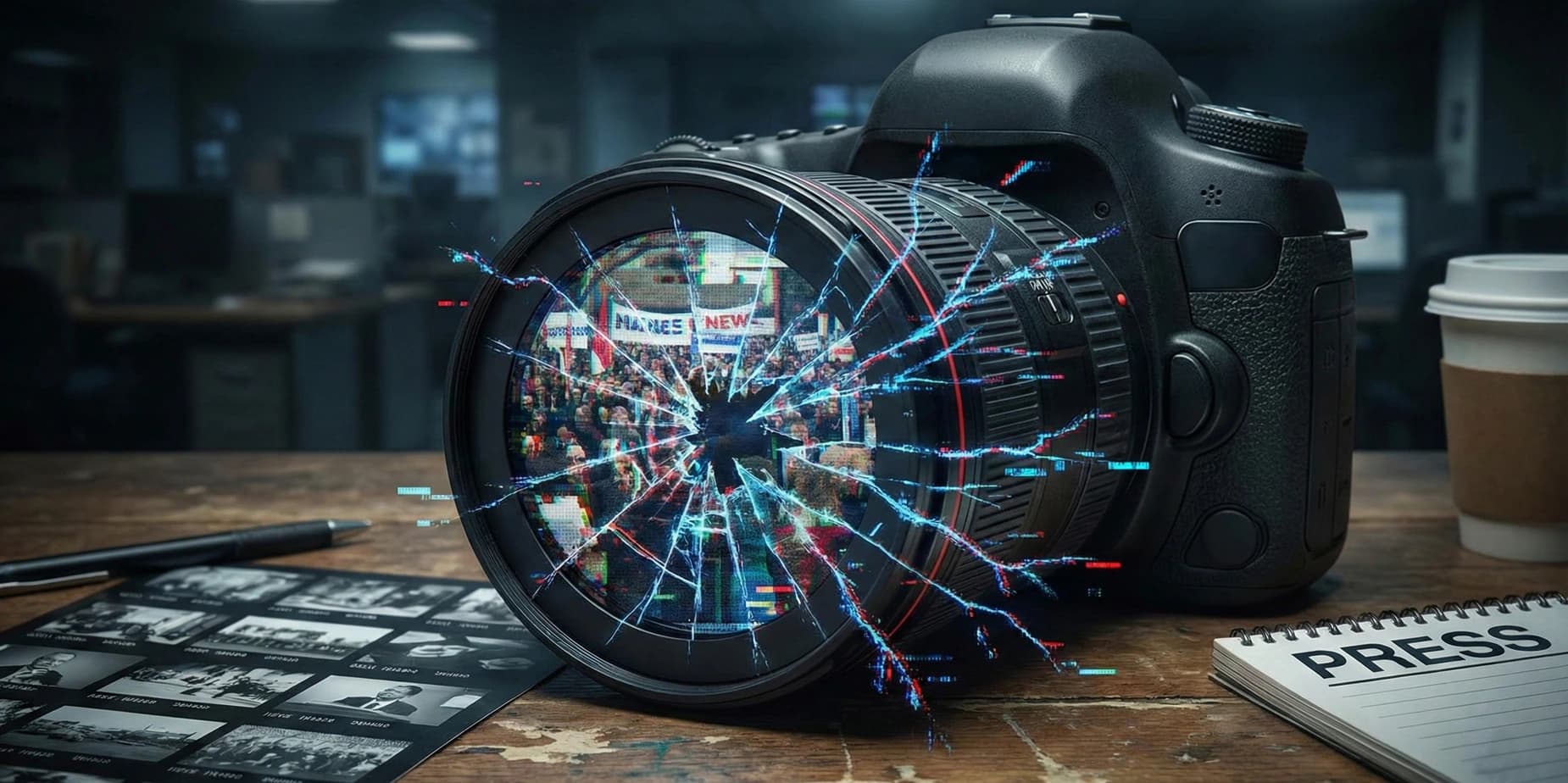
Modern news cycles move fast, touch exceptionally large audiences, and require nonstop editorial coverage as the narrative emerges. The role of photojournalism is central to providing up-to-the minute coverage audiences can understand. And yet, with manipulated and deceptive images pouring over the open internet and being shared across social channels, photojournalists and editors must remain vigilant.
Failing to detect AI content in an image, or unintentionally distributing a manipulated image, can produce an immediate backlash that threatens the media business’s monetization and the audience’s trust in all media. Seeing can no longer be considered believing. The advancement of generative AI raises the stakes for newsrooms to protect their brand and audiences from misleading media.
AI-Manipulated Images Threaten Reputable Media
Photojournalism provides a broader view that contextualizes events and trends. Audiences have traditionally held to the belief that “the pictures don’t lie.” But sophisticated deepfakes, simpler cheapfakes and deceptively edited images are commonplace now, and every image is under audience suspicion. Editorial teams can and have been fooled by AI-generated or -manipulated images, and publishing these images undermines audience’s confidence in all quality media.
The consequences for media businesses are severe. There is a straight line between loss of trust to cancelled subscriptions, reduced traffic, advertiser pullback, and overall monetization. The publisher’s brand and reputation depend on editorial teams’ ability to vouch for the authenticity of their photojournalism.
Photojournalists vs. Fakes: The Stakes for Audience Trust
Over the last few years, digital media has been plagued with countless AI-manipulated hoax photos. Media professionals will likely remember these recent examples:
- “World Leaders at G7” hoax: In the spring of 2025, news aggregators and social media news pages with international reach posted an AI image, showing heads of state lining up to meet with President Trump at the G7 summit. Media watchers quickly noticed inconsistencies in background elements and facial features of the subjects. The backlash the impacted news outlets faced had a halo effect on audiences’ trust in the authenticity in any related coverage.
- Fake Hurricane Melissa videos: In the aftermath of Hurricane Melissa, in October 2025, AI-manipulated videos circulated on social channels purporting to show devastation from the storm’s effects in Jamaica. That included an AI video of a destroyed Kingston Airport, and of sharks in a swimming pool. These photos appeared in social feeds close to real photos from reputable outlets, confusing audiences.
- “Crying protester” hoax: In January 2026, after a lawyer and law professor was arrested during a protest at church in St. Paul, MN, the White House distributed a doctored photo where she was falsely shown crying while being led from the scene. News outlets across the U.S. scrambled to warn audiences that this photo had been manipulated by AI, and that she was not crying in the real image.
Each of these scandals, brought on by improper photo authentication, led to wide public criticism and amplification from bad actors who aim specifically to break down audiences’ trust in quality media.
Speed and Volume Amplify the Risks
The increasingly realistic nature of generative AI outputs can deceive even media professionals, which poses great challenges for editorial teams to separate AI from authentic images. AI tools today are capable of evading watermarking and obfuscating the real sources of images. Simple, publicly accessible editing tools can produce cheapfakes that deceive by misrepresenting the context of a photo, or through slight edits. News organizations are pressured to publish before the competition, ramping up the pressure for editorial teams to spot deceptive images early.
The sheer volume of synthetic images across the web poses additional challenges for photojournalists and editors. Image vetting demands added time and resources, while the risks of missing the mark only increase.
How to Protect Your Newsroom from Unwanted AI Images
Editorial teams must protect the authenticity of their photojournalism and the integrity of their work. Here’s how photojournalists and editors can begin to take decisive action, starting today:
- Make use of AI-powered AI detection tools. Sophisticated scams call for sophisticated protection. AI detection software provides a valuable lift for editorial teams, keeping pace with the advancement of generative AI itself. Automated tools can efficiently detect inconsistencies, familiar patterns and hard-to-detect digital artifacts, augmenting human vetting.
- Establish protocols for photo verification. A consistent verification process is essential for consistent protection. Editorial teams need to create and follow a process for checking metadata, backgrounds and sources. This is especially important with viral images, where the source may be difficult to track.
- Provide training to better understand ongoing AI evolution. With their own eyes, editorial teams can point out some of the telltale signs of AI in images – unnatural hands and body proportions, suspect lighting and edges, questionable contexts for the subject or event. But as AI outputs evolve, teams will need ongoing training to keep pace.
- Use reverse image search and tracking. Reverse image searches can reveal where else an image has appeared on the web, which helps track the image to its origin. Image verification processes must involve comparing images to authenticated existing images to spot inconsistencies.
- Build transparency and caution into editorial culture. Create a culture where professionals understand the value of delaying publication to authenticate content provenance. Disclosing any use of AI for creating or editing images, and providing transparency around the sources of image, builds audience trust.
Manual Verification Only Goes So Far
The human eye – even the expert eye – is no match for today’s AI images. Hoaxes and scammers are advancing their ability to mimic realistic context and detail – putting editorial teams using manual verification at a serious disadvantage. Human verification is not enough to inspect pixels and track all images back to their original sources, especially in a fast-paced news cycle. Risks of error only grow without suitable AI detection tools – and with it grows the risk to the publisher’s brand and marketplace standing.
Credibility Starts with Copyleaks
Copyleaks is committed to a reliable, safe media ecosystem – and to empowering photojournalists and editorial teams to ensure authenticity and credibility of their content. Copyleaks’ AI detection solution provides advanced AI capacities to newsrooms, so they can separate authentic images from manipulated images before they have a chance to touch and misguide the audience. With technology and partnership from Copyleaks, editorial teams uphold their integrity and reputation with audiences, so they can nurture loyalty and grow traffic over time. Truth is the cornerstone of quality media, and Copyleaks’ AI detector is a crucial cornerstone of ensuring truth.