What You Should Know About AI Resume Builder?

As with all the promises AI brings with it, the ability to allow an AI resume builder to create your CV is incredibly tempting: just enter your professional details and get the perfect resume almost instantly.
In the super competitive professional world, in which there can be hundreds, if not thousands of applicants for each role, it’s only natural to want to quickly adapt your resume to somewhat ease the grueling job hunting process. Although these AI tools are very good at providing inspiration and can help kickstart your resume creation, fully relying on them is not the best idea.
The ATS and the Human Involvement
ATS is the abbreviation of Applicant Tracking Systems – a tool used by recruiters to filter resumes. There is a theory circulating that since these ATSs actually use AI themselves to go through all the applications, candidates have to use AI resume builders to trick the system and get through the filters.
But it turns out reality is much more human. Recruitment experts say that ATS are less sophisticated filtering machine and more organizational databases. In other words – even though these platforms are smart, their main job is simply to help recruiters organize and search, rather than make any recruitment decisions.
So, the true challenge isn’t to get through a machine, no matter how smart, but to get through a real flesh and blood human recruiter, who’s looking for top quality candidates.
Let’s dive a bit deeper into this point.
The Generic Trap
AI works with patterns, putting together words and sentences that seem statistically appropriate. The result can be a seemingly polished and professional resume, but it is actually very generic.
Think of phrases like “results-driven professional with a proven track record”; sounds good, right? Well, in the real professional world, nobody actually uses them. And when a recruiter reads such phrases in your resume, and probably in hundreds of other CVs created by AI, it’s an immediate red flag. And when they run your resume through an AI detector only to find that it is indeed 100% AI-generated, you’ve lost their trust even before you had any chance at a start.
“As a recruiter I do not mind if people use AI for their resume. However, I caution people against it. It will make your resume look the same as everyone else that is applying. It will look totally average and boring,” says lead technical recruiter Eric Derby, in his LinkedIn post.
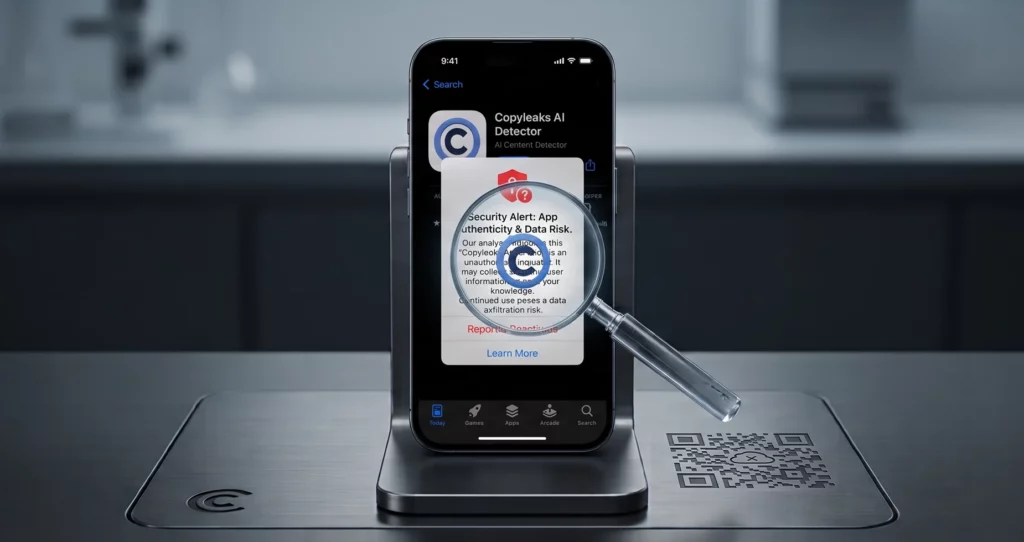
At the very least, use an AI detector tool before you submit your resume, to make sure that it doesn’t read like a generic description of your work experience. The Copyleaks AI detector tool can help ensure that your own voice is still present and shines through the AI-generated phrasing.

The Reason AI Can’t Provide Quality Results
The biggest weakness of generative AI is that it cannot take the personal context into account, or even discover truth. For example, it can very accurately describe your responsibilities and explain that you managed a team of five, but it can’t authentically put into words what unique outcomes you delivered as a team manager. In other words, AI can very eloquently phrase your achievements, but cannot add that personal point of view that makes you good at your job.
And since AI is so popular these days, many recruiters have become very sensitive to AI-lingo.
“In particular, I can often tell if people are using AI because I see certain words and phrases in the top summary section. These are almost never used in RL,” adds Derby. “If you want to look like the average of all resumes out there, good and bad, use AI. If you want a great resume, make it yourself.”
Template Fatigue and the Accidental Plagiarism
Obviously, numerous candidates use AI resume builders. Since these AI models have a finite pool of bullet points and sample documents to choose from, it stands to reason that once thousands of candidates use those specific so-called optimized phrasings, their CV becomes generic. This causes what’s called template fatigue: recruiters who see the same or very similar structures and phrasings across an endless number of resumes, simply start to tune them out. So, if your CV is too similar to a template used by thousands of other people, you are effectively invisible.
The Myth of Gaming the ATS
As mentioned earlier, there is this myth going around that the only way to pass an ATS is to use keywords that only AI can provide you with. This is simply not true. ATS platforms use scanning software to get your application into the system, not AI to reject them. Usually, rejections are the result of basic filtering questions – such as “Do you live in the US?” – or a human recruiter who decided you’re not suitable for the job.
The Risk of Being a Carbon Copy
More specifically, when you rely on AI resume builders to phrase your high-performing bullet points, you risk accidental plagiarism, even though you might not be copying from anyone directly. That’s why it’s a good idea to use a plagiarism checker, just to make sure your resume has not become completely generic.
A plagiarism checker isn’t just for students and academic essays; it’s a tool that ensures your career highlights aren’t just carbon copies of a global template, but your own professional story. When they sift through 900 applications for a single role and find that 300 career summaries are almost identical, recruiters may just disqualify the entire group. Interviewing the hundreds who were more authentic simply makes more sense.
A general template and structure is okay, and can actually help make your CV more readable, but the content has to be your own.

The AI Headshot and Uncanny Valley
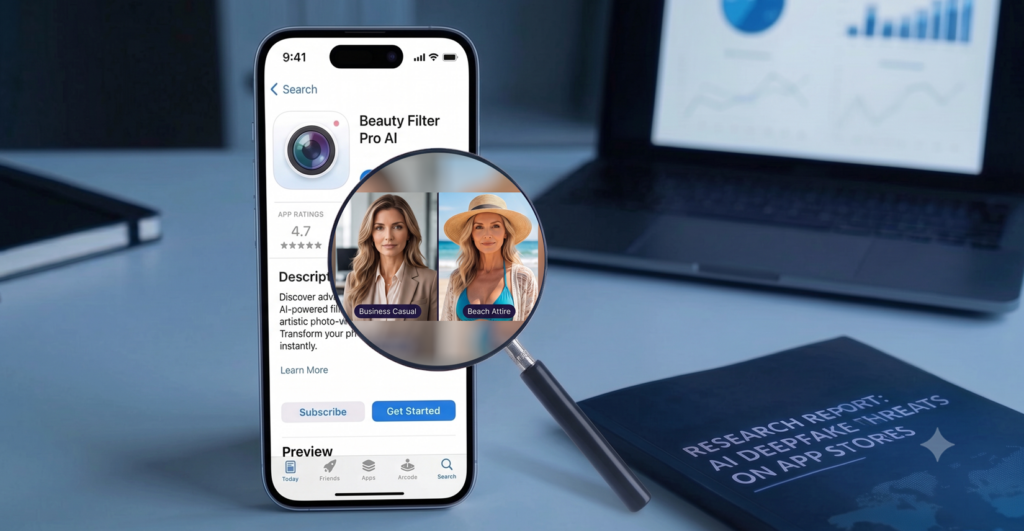
AI generated headshots are the latest fad of AI resume builders.
These technologies allow you to upload your best selfies and they return a photo of you dressed in a professional looking attire. Often, these resulting photos are what’s called the Uncanny Valley, where a digitally created photo looks human but not completely, and always feels a bit off. In a recruitment setting, this fake photo can very easily cause distrust.
Transparency as a Corporate Value
As recruiters today prefer a human-centric hiring approach, many of them use an AI image detector to definitively determine if your headshot looks too digital.
When your photo is flagged, the message recruiters get is that you’re not authentic. So, it’s not a must to pay a professional photographer, but taking the time to capture some good headshots with your phone will convey a lot more personality and trustworthiness than your digital twin.

The Correct Balance
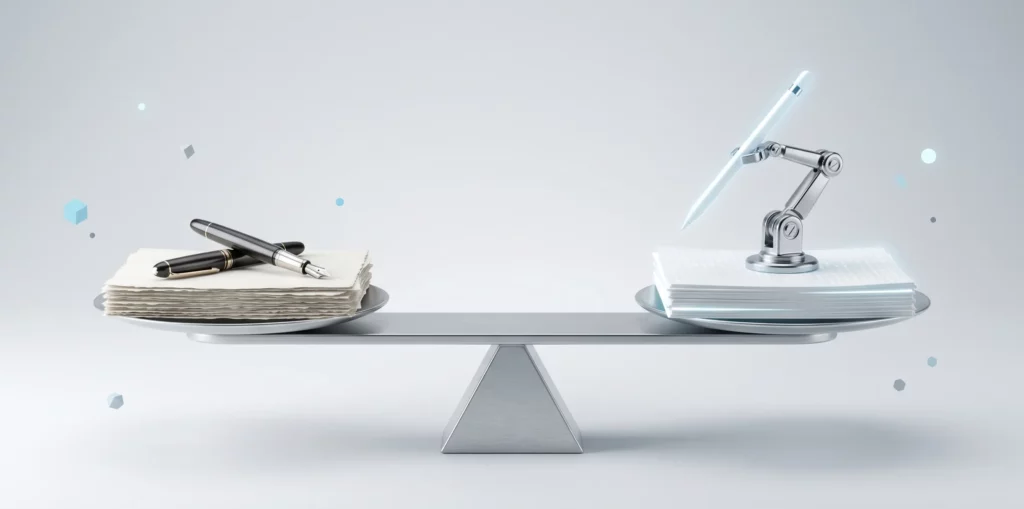
And yet, having said all that, we don’t mean to suggest you should completely avoid using AI resume builders. Just apply the correct balance of the administrative and structural work up to the AI tools, and make sure that the major chunk of narrative and personality are entirely human.
A Structural Wiz
AI is a brilliant organizer, so play on its strengths and let it help you structure your resume in a way that makes it easy to read and cleanly formatted. You can also use it to suggest edits to cluttered or confused paragraphs. But, keep it away from the sections that talk about your achievements.
Verify First, Send Later
Once your resume is ready, use detection tools for quality control:
- An AI detector can make sure your experience and achievement section doesn’t sound like a bot.
- A plagiarism checker can help determine whether your career highlights are too similar to millions of others.
- An AI image detector can flag any headshots that crossed into the uncanny valley.
The Dos and Don’ts of Resume Creation
Remember that if all goes well, what comes after the resume is an interview. You really don’t want to show up to this interview without being able to back up all that perfect phrasing when you speak to your interviewers.
Don’t:
- Prompt and send
Treat the initial output from an AI resume builder as your very first draft. Edit it, personalize it, and make sure your character shines through.
- Overdo it with the keywords
Yes, AI can use every possible industry term in your resume. That’s not only unnecessary, it can actually backfire. Recruiters know a keyword soup when they see one, plus you want to be able to back up all these terms during the human interview.
- Use AI for the experience section
AI resume builders can sometimes hallucinate stuff they conclude you should have experience with, based on your job title. Nothing can damage your credibility more than being exposed during the interview, or if an AI detector flags your resume as synthetic.
Do:
- Use AI for editing
Write your own experience section and then ask AI to either make it more concise or simply suggest edits to improve your phrasing. This way, you are the one driving this car, while the AI stays in the back seat doing what it does best: linguistics.
- Include quantifiable impact
AI has no way to guess your numbers, so don’t leave it up to AI. Instead of using generic descriptions like “improved sales”, write real numbers, like “generated a 30% increase in sales for Q2”.
- Cross-check with reality
When your resume is finished, read your summary and experience aloud. If you don’t sound like you would in real life, rewrite. Think of your resume as your future interview script: it should sound like you.

Frequently Asked Questions
Are AI resume builders worth it?They are worth it to some extent. If you were to fully build your resume using AI resume builders, then it is not worth it. However, if you were to lightly use them, as discussed previously, to format it better for readability, then yes, it is worth it.
Are resume builders safe?They are generally safe; however, you should always double-check where you are inserting your professional details due to potential cases of identity theft when you add your address, phone number, email address, and other personal details, including your certifications, etc.