TikTok Scam Ads Use AI to Impersonate Celebrities Like Taylor Swift

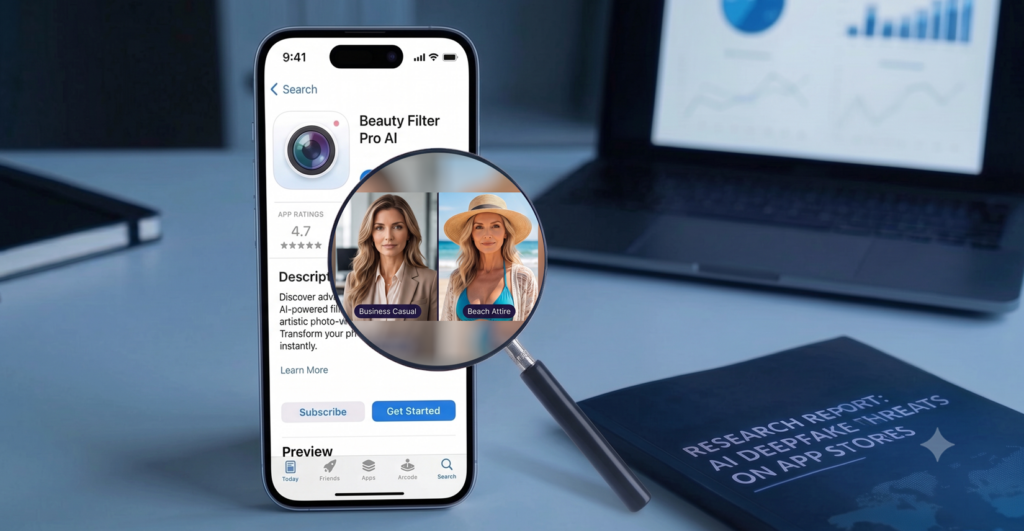
Earlier this month, our researchers identified a growing ecosystem of nonconsensual deepfake content on TikTok. As part of that research, we found hyper-sexualized ads promoting nonconsensual face and body swapping or digital “undressing.” See the full report here.
The trend is now prompting action from celebrities themselves. Taylor Swift, for example, has now filed trademarks to protect her voice and likeness from AI misuse after repeated deepfake incidents.
With that in mind, today, we are sharing information on additional AI-manipulated ads we found on the platform. This involves a cluster of ads using the likenesses of top celebrities like Taylor Swift, Kim Kardashian, and Rihanna to promote potentially fraudulent or malicious services. The deepfakes use both video and audio, with realistic-sounding voices and textured filters meant to mask some of the flaws in the AI-generated visuals.
See snippets of the ads here:
The ads generally promote rewards programs where users can watch TikTok content and be rewarded. In one ad, a fake Rihanna says, “You literally just watch content and give your opinion.” In another, a fake Taylor Swift claims she found a feature called TikTok Pay, adding, “if the page opens for you, don’t overthink it,” and urging users to sign up.
The celebrities appear to be in interviews — on red carpets, podcasts, or talk shows – where real footage has been repurposed and manipulated using AI.
In several ads, TikTok’s official branding is also used when the ad is clicked on. However, the user is redirected to a third-party service that appears to be vibe-coded, even including Lovable branding on the page and in the URLs. These pages then prompt users to enter their name and personal information. See an example here:

This is part of a broader pattern. There is a growing body of reporting that points to the rise of scam ads across social media platforms. The nonprofit Consumer Federation of America recently filed a lawsuit against Meta, for example, over its handling of scams. Meanwhile, the FTC notes that scam ads are one of the top vehicles for shopping scams on social media. AI is only accelerating the problem, with deepfaked celebrities and influencers adding a false sense of credibility to scam ads in ways that simply didn’t exist a year ago.
With that in mind, here are some tips for identifying deepfake content online, whether in ads or other content:
1. Look for unnatural physical details
AI still struggles with physical details in human beings, especially when they’re in motion. Watch for odd eye movement, facial asymmetry, and unrealistic hands or proportions. Zoom in, pause, and review a video frame by frame to catch more subtle issues.
2. Listen for audio mismatches
Check for poor lip sync, unnatural pacing, or a flat, robotic tone. Warbles, static, or inconsistent background noise can also be a sign of manipulated audio. Today, audio is one of the best “tells” for identifying synthetic people in videos.
3. Check backgrounds and context
Look for flickering edges, warped or “melting” backgrounds, and inconsistent lighting. In this case, the ads feature a textured filter over the video to try to address this. Also, ask yourself whether the setting actually makes sense for that person.
4. Verify against real sources
Compare the content with known footage, past interviews, and public statements. Has Taylor Swift ever talked about a rewards program for TikTok, for example? Unlikely. Cross-check timelines and context. When in doubt, get more eyes on it, as trusted networks can help spot inconsistencies.
5. Use detection platforms alongside manual review
Automation can improve accuracy in detection. Use tools to analyze metadata, run reverse image or video searches, and detect AI artifacts that humans normally miss. The strongest approach combines a person plus machine technology with human review.
Copyleaks AI Detector
Copyleaks helps people and businesses stay ahead of deepfakes with an AI-powered detector that analyzes images now – with video and audio coming soon – for signs of manipulation, well beyond what’s generally possible through human analysis alone. This includes pinpointing specific areas where content has been altered.
As deepfake bad actors and scams evolve, continuous innovation can help detection keep pace. In a landscape where authenticity can no longer be assumed, protecting content integrity is more important than ever.