What’s Your Recipe for Academic Integrity?
Today is the International Center for Academic Integrity (ICAI)’s International Day of Action for Academic Integrity. This year’s theme, “Recipes for Integrity: Sharing Your Signature Dish,” asks a very important question: what do you actually do to make your work your own?
Everyone has a “recipe” for how they make original content, but what are the ingredients? And what does the finished product look like?
To support the ICAI’s initiative, Copyleaks is sharing the recipe for our special “dish”: The Academic Integrity Layer Cake.
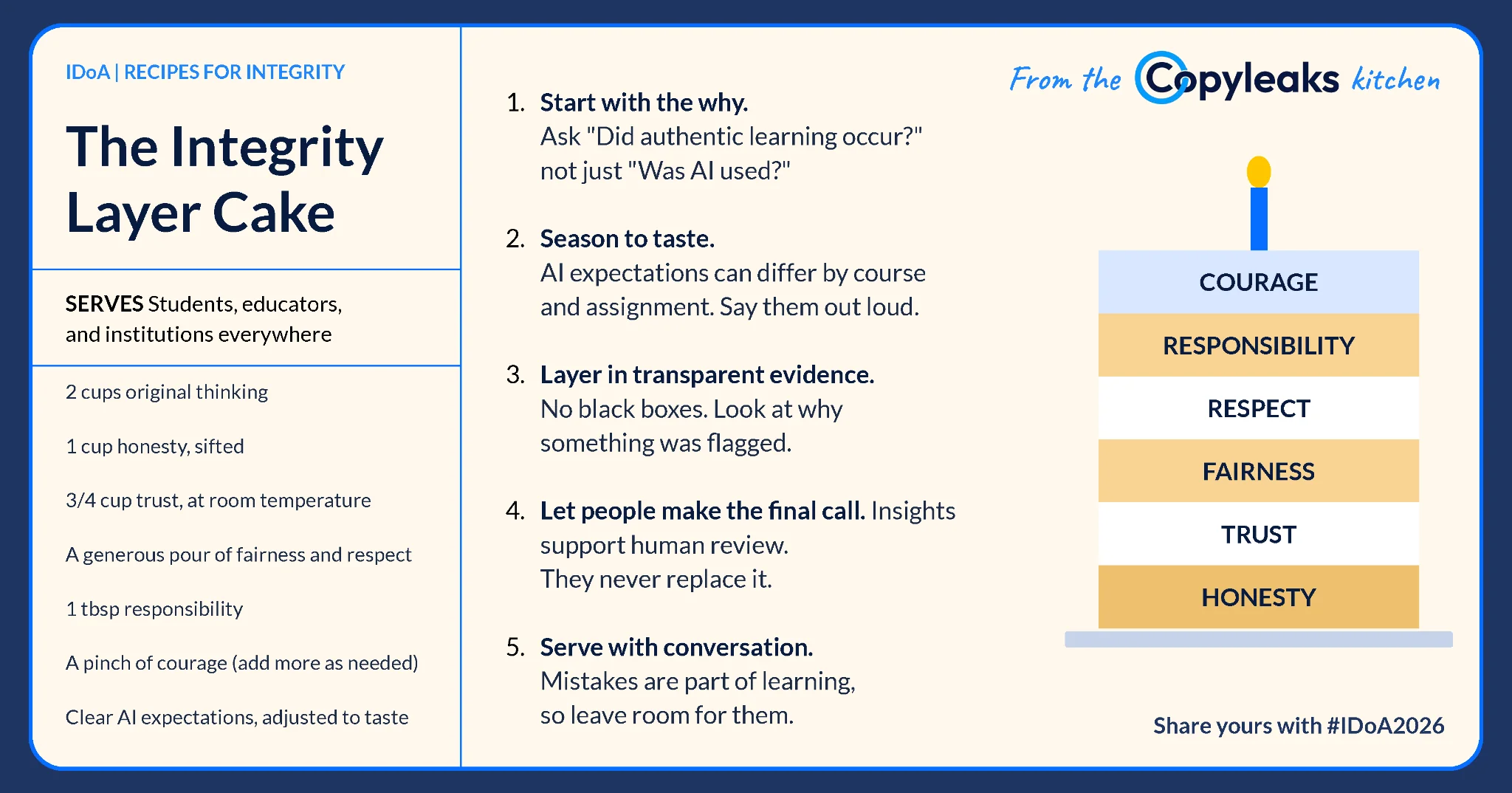
Serves: Students, educators, and institutions everywhere
Ingredients
- 2 cups original thinking
- 1 cup honesty, sifted
- 3/4 cup trust, at room temperature
- A generous pour of fairness and respect
- 1 tbsp responsibility
- A pinch of courage (add more as needed)
- Clear AI expectations, adjusted to taste
Method
- Start with the why. Ask “Did authentic learning occur?” not just “Was AI used?”
- Season to taste. AI expectations can differ by course and assignment. Say them out loud.
- Layer in transparent data and insights. No black boxes. Look at why something was flagged.
- Let people with context make the final call. Insights support educator review. They never replace it.
- Serve with conversation. Mistakes are part of learning, so leave room for them.
Can you really bake a cake like this? Of course not, but the choices behind each ingredient come up in real schoolwork.
A student needs to know when AI help is welcome as a tool, or when it would take over the work they were meant to do on their own. An educator reviewing a flagged piece of content needs more than just a score. And if someone gets it wrong, there should be room to talk about what happened and learn from it.
Want to learn how to add academic integrity to your tech stack?
Book a MeetingA Few Secret Ingredients
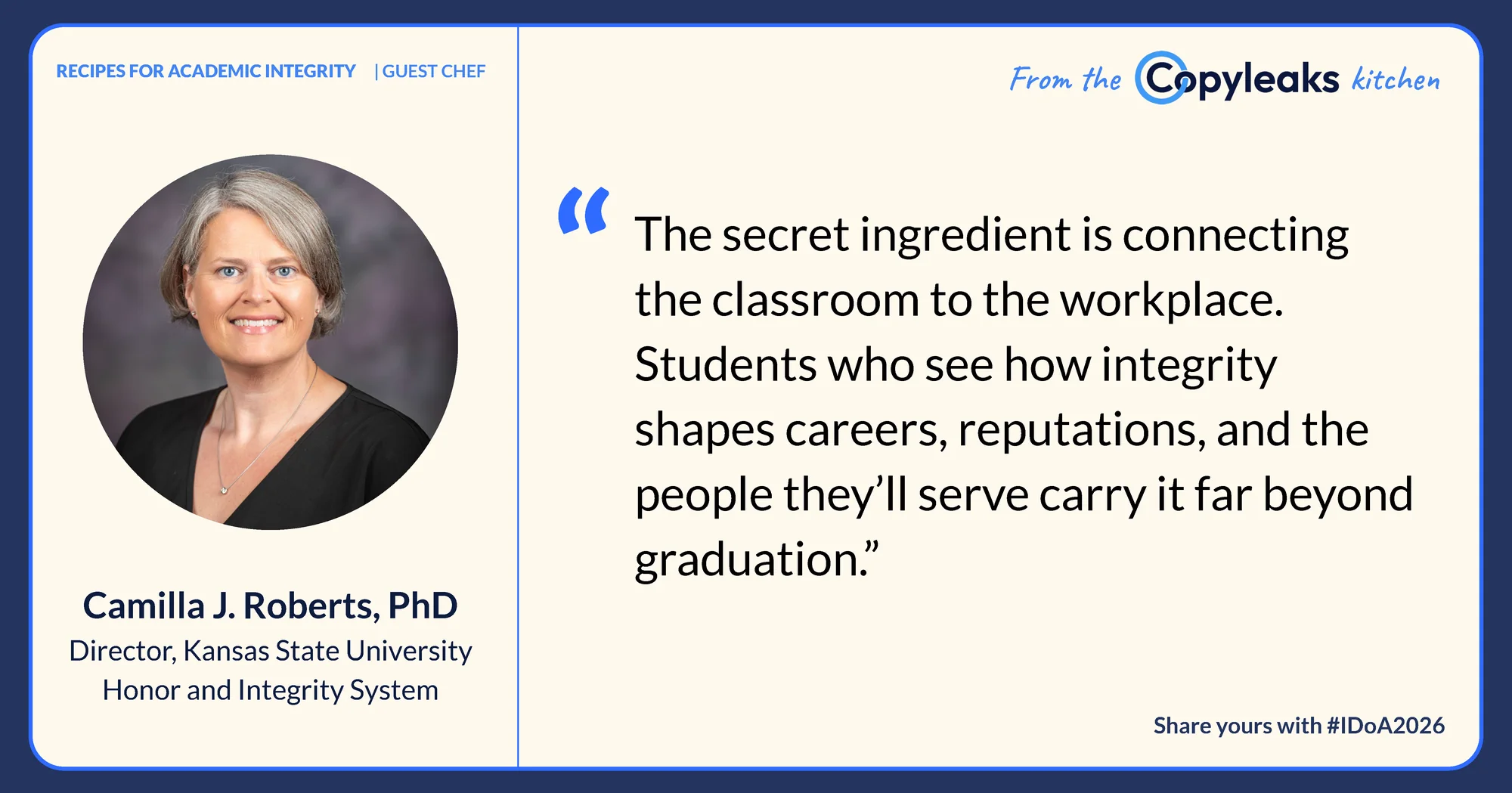
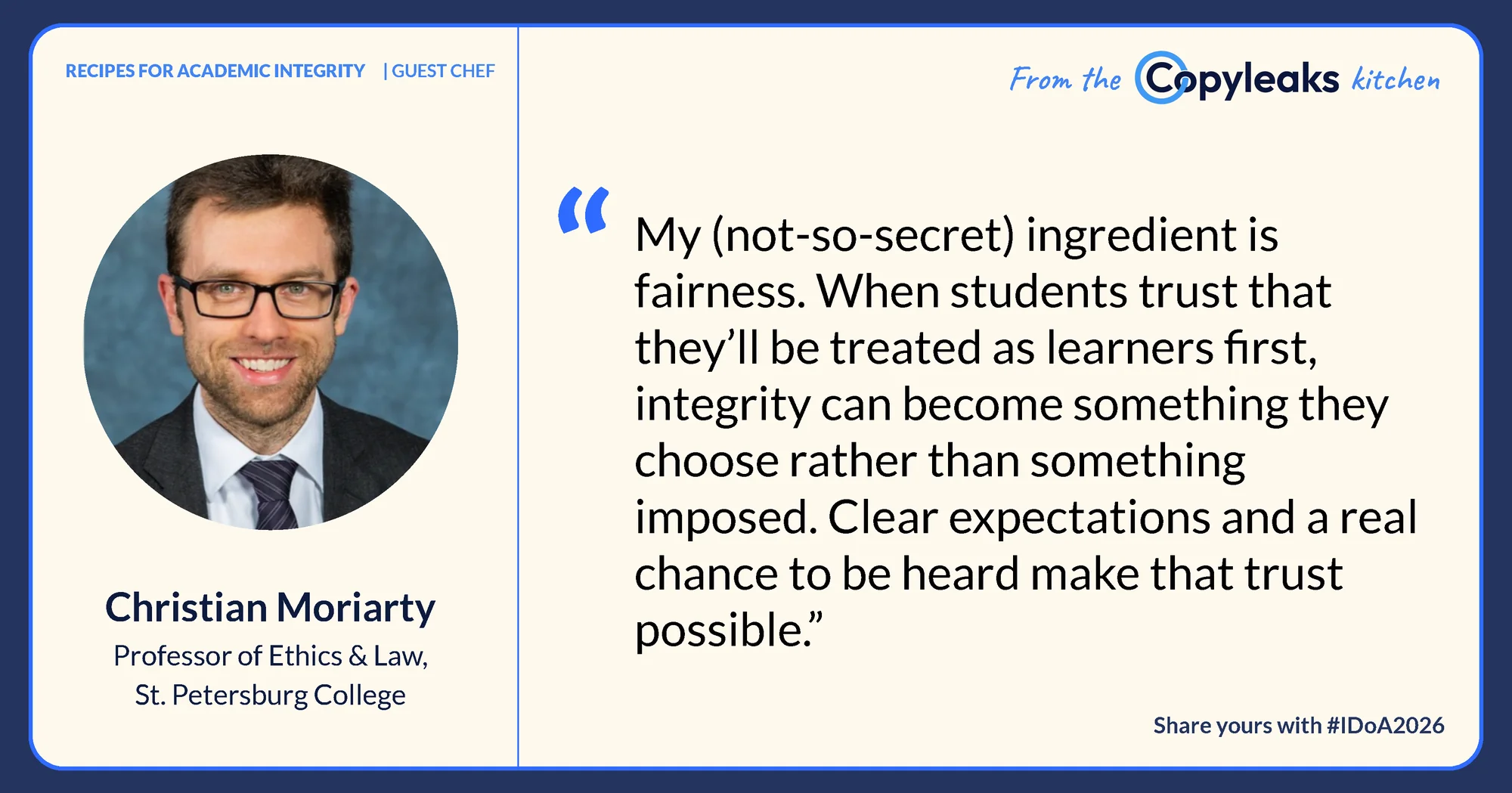
What’s a great recipe without a little something extra? That’s why we’ve also asked academic integrity leaders and members of our team to tell us what they would add to the recipe. Here are a few of their answers:
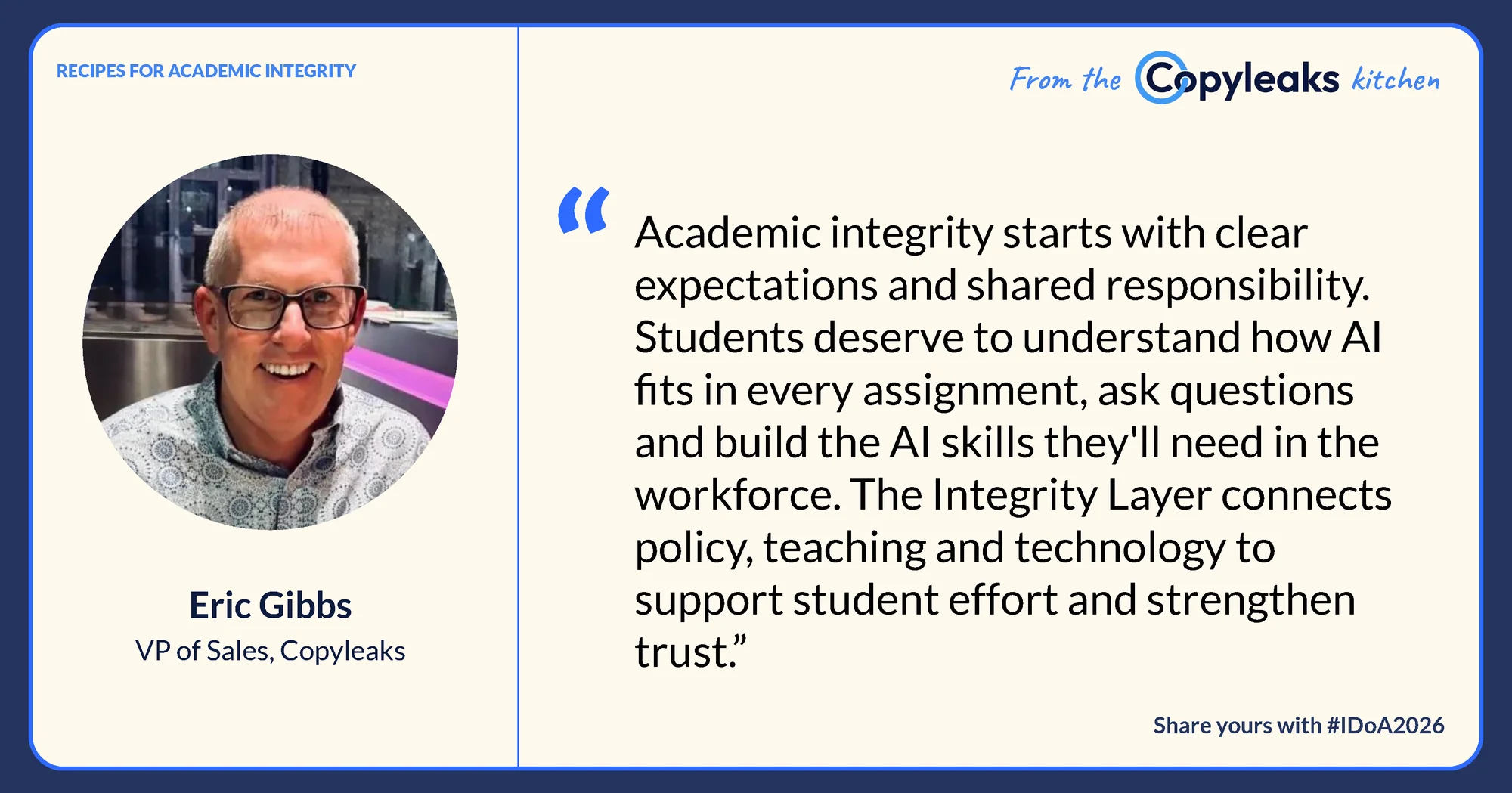
Now it’s your turn. Share your recipe with #IDoA2026 and visit ICAI’s International Day of Action page to learn more.
Explore Academic Integrity.
Book a Meeting